What a tune-up covers, item by item
Checklists vary by contractor and equipment, but a thorough visit generally includes:
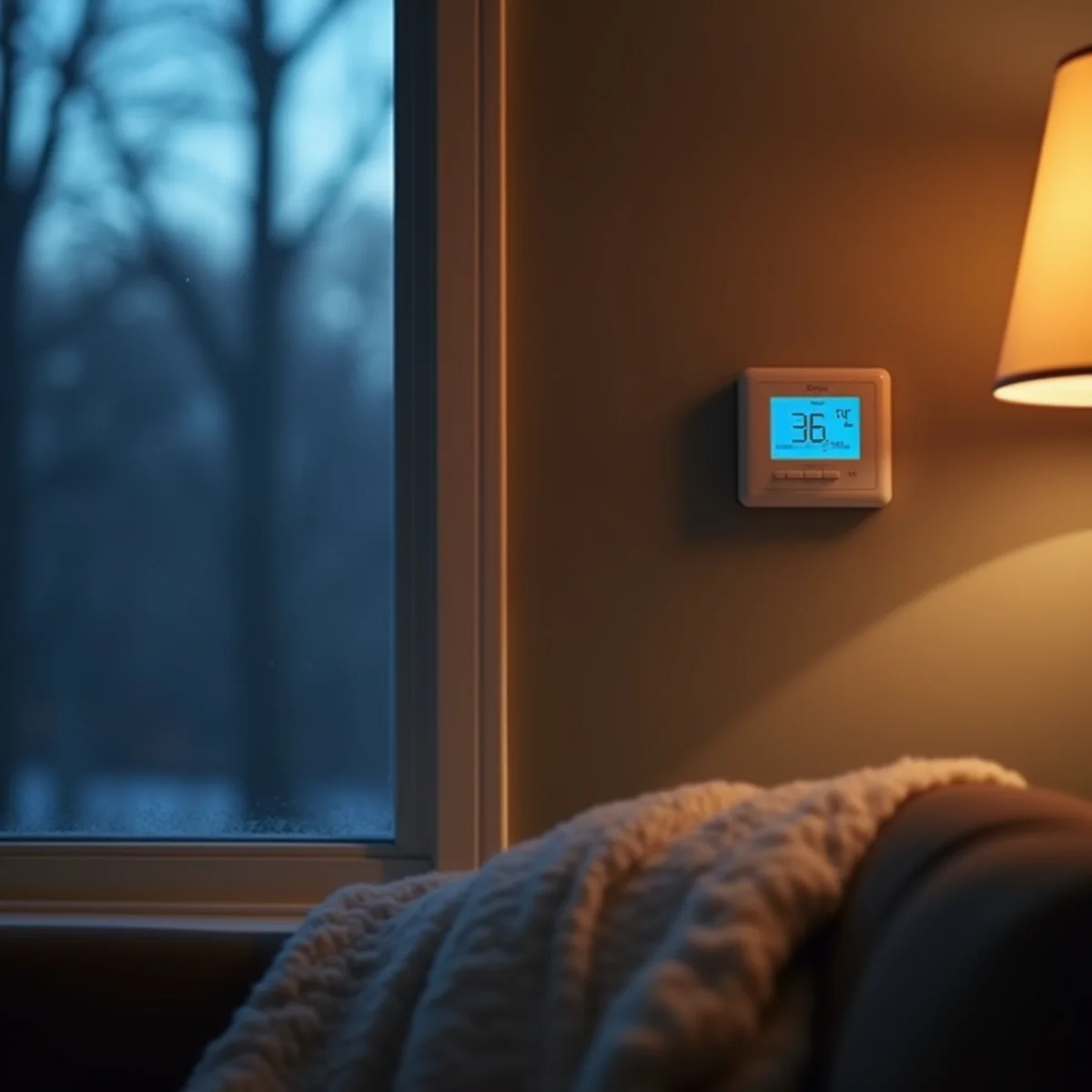
- Checking the filter, thermostat and thermostat wiring
- Tightening electrical connections and looking for scorched or corroded terminals
- Measuring blower motor amp draw and checking the blower wheel for dust
- Comparing supply and return air temperatures
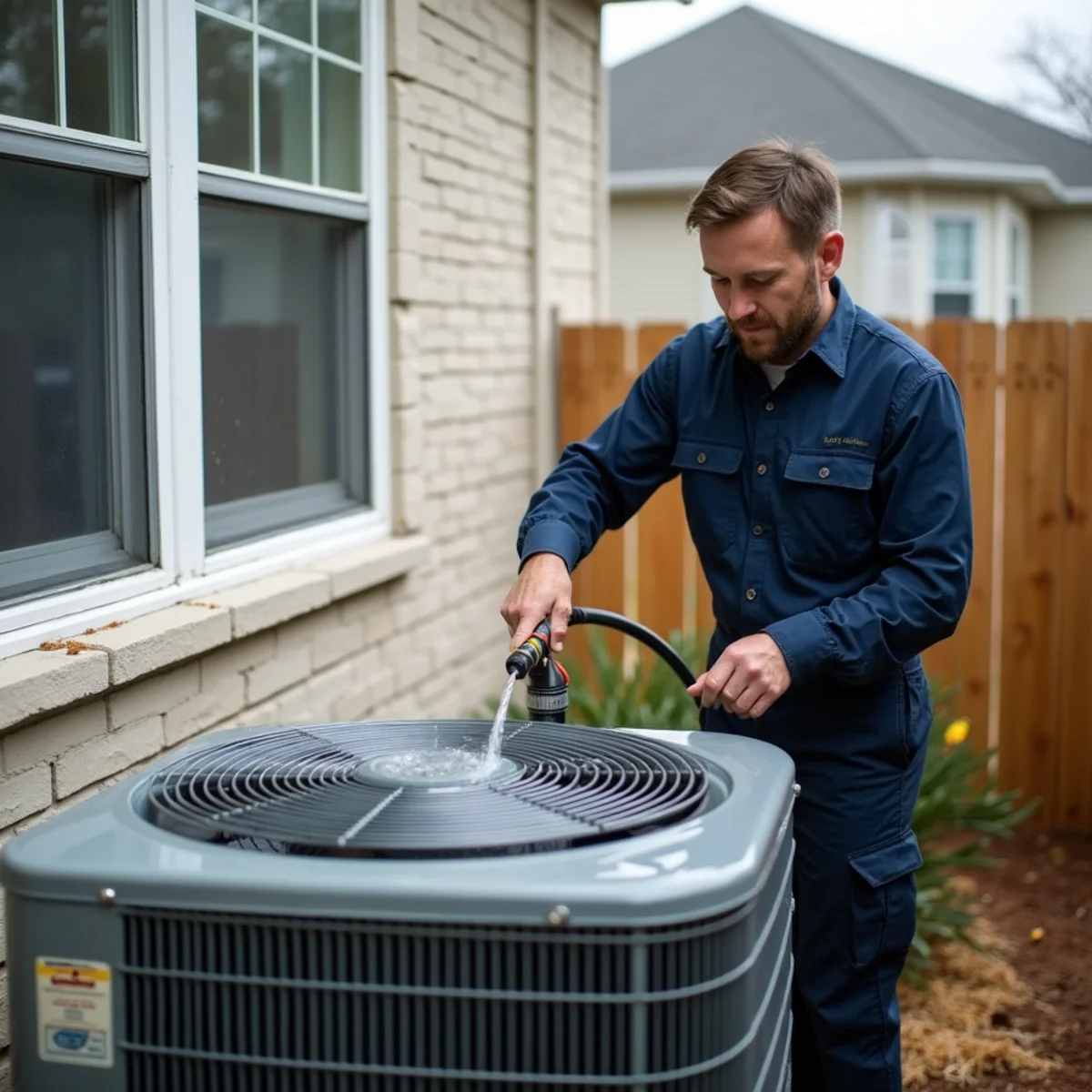
- Flushing the condensate drain and testing the float switch
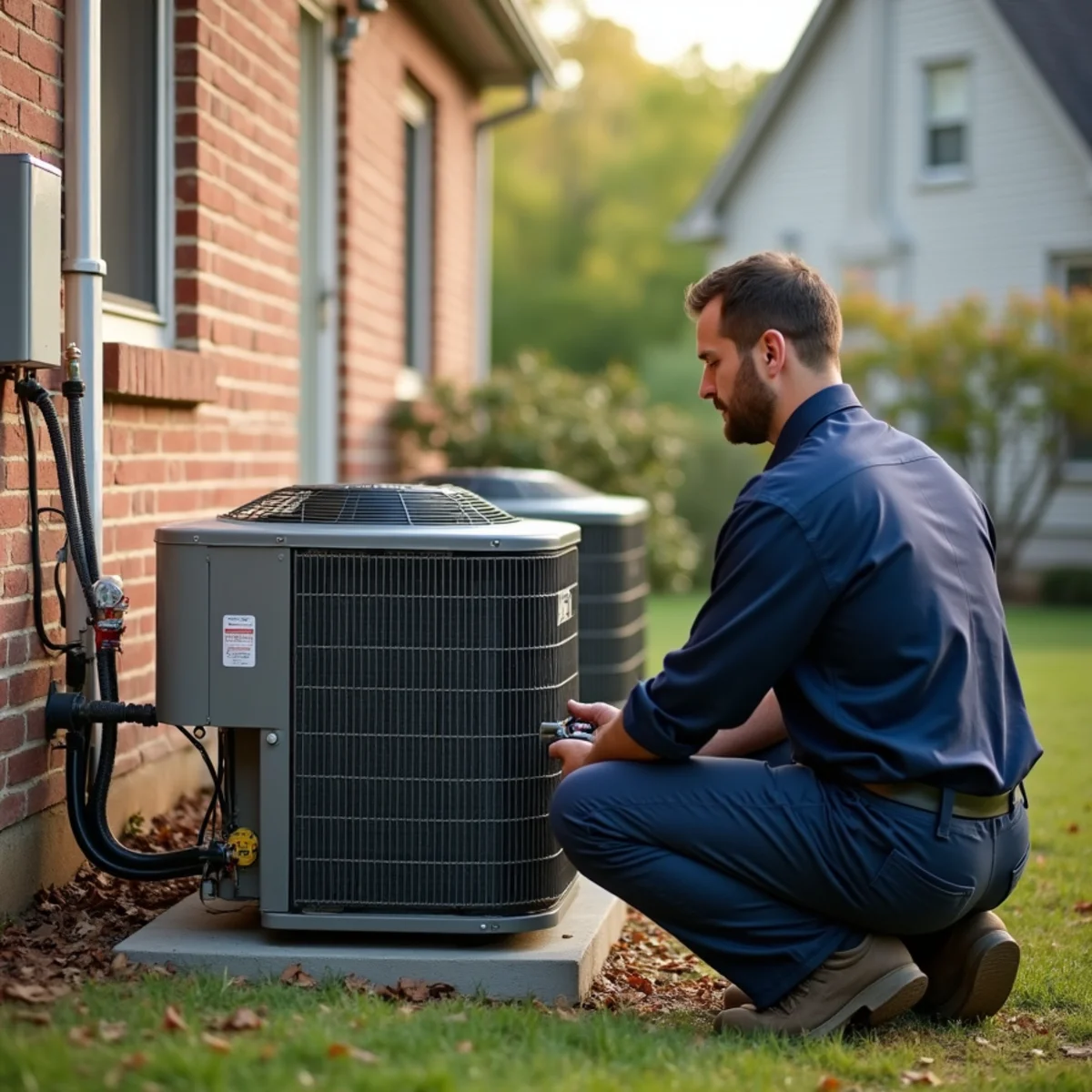
- Cooling: cleaning the outdoor coil, testing the capacitor and contactor, reading refrigerant pressures
- Heating: inspecting burners, igniter and flame sensor, checking gas pressure and draft, inspecting the heat exchanger, testing for carbon monoxide and testing the safety switches
Ask for a written summary at the end: what was cleaned, what measured normal and what is wearing out. Nothing should be replaced during a tune-up without a price first.
Spring AC tune-up: coils, refrigerant pressures, capacitors and the condensate drain
Book the cooling check in March or April, before the first hot stretch.
Coils
The outdoor coil sheds your home's heat. Around Kennesaw it collects pine pollen and grass clippings, and a coated coil makes the compressor work harder. The technician cleans it with coil cleaner and gentle water, never a pressure washer that folds the fins.
Refrigerant pressures
Gauge readings that are off point to a low charge, a restriction or an airflow problem. Low refrigerant means a leak, and topping off without finding it just delays the next call. Older R-22 systems need extra thought, since U.S. production of R-22 ended in 2020. Anyone handling refrigerant must hold EPA Section 608 certification.
Capacitor
The run capacitor helps the compressor and fan start. One that tests weak in April is the one most likely to quit on a 95-degree afternoon.
Condensate drain
On a humid day your AC pulls gallons of water from the air, and the drain line grows algae. When the upstairs air handler sits in the attic, a clog means a full pan, a tripped float switch or a stained ceiling. Flushing that line may be the most valuable part of the visit.
Fall furnace check: burners, flame sensor, heat exchanger and carbon monoxide test
Book the heating check in October or early November. Most detached homes here burn natural gas, so this visit is about safety as much as comfort.
Burners, igniter and flame sensor
The technician checks the burners and looks for igniter cracks. The flame sensor is a thin rod that proves the burners lit. A light film on it makes the furnace light, run a few seconds and shut off, over and over. If yours is doing that now, read our homeowner checklist for a furnace that will not start.
Heat exchanger and carbon monoxide
The heat exchanger keeps combustion gases out of your air. The technician looks for cracks and rust-through, confirms the flue drafts properly and tests for carbon monoxide. A furnace with a cracked heat exchanger should stay shut down until the problem is fixed or the furnace is replaced.
Safety warning: If you smell gas or your carbon monoxide alarm sounds, do not wait for a tune-up. Leave the house now and call 911 or the gas company from outside. Then call us.
Heat pumps
Heat pumps, common in townhomes near Kennesaw State University, get a different fall check: defrost controls, reversing valve and backup heat strips. Our heat pump repair page explains those parts.
Pollen, humidity and attic heat: why Kennesaw systems need a yearly visit
Pollen. Each spring a yellow-green film coats cars, decks and outdoor units across Cobb County. It loads filters fast and packs deep into condenser fins.
Humidity. Summer highs in the upper 80s come with damp air, so the drain line works from May through September. A system low on charge or short on airflow also dehumidifies poorly, and the house feels clammy at the set temperature.
Attic heat. In many two-story homes the upstairs air handler sits in an attic that bakes well past the outdoor temperature. Motors, capacitors and drain lines up there age faster, and a tune-up is often the only time anyone climbs up to look.
Age. Kennesaw's housing has a median build year of 1998, and close to one home in three dates from the 2000s, plenty of them still on builder-grade equipment. Older systems gain the most from yearly checks, and the report gives an honest read on remaining life. Our guide to what drives AC repair costs in Kennesaw helps when you are weighing a fix.
Landlords with rentals near KSU often book tune-ups between tenants, and a dated service record helps when a tenant reports a problem.
Filter sizes and how often to change them
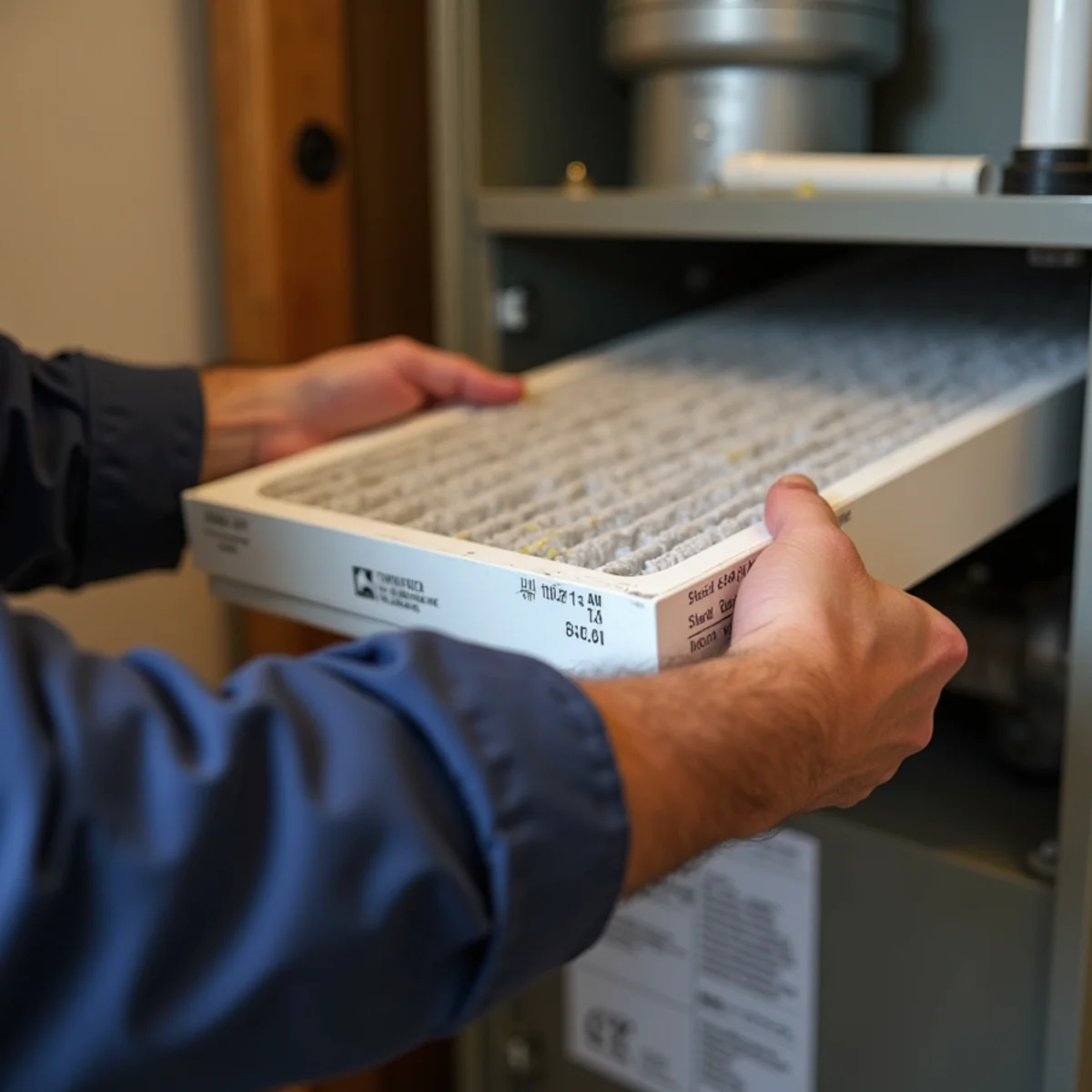
A clogged filter starves the system of air, which can freeze the AC coil in summer and trip the furnace's high limit in winter.
Find your filter and its size
- 1-inch filters sit in a wall or ceiling return grille, or in a slot at the furnace or air handler.
- 4-inch or 5-inch media filters sit in a cabinet attached to the equipment and last much longer.
The size is printed on the frame edge, for example 16x25x1 or 20x25x4. Buy by that printed size. Two-system homes often have two different filters, and the upstairs one may be at the attic unit or behind a hallway ceiling grille.
MERV ratings
- MERV 1 to 4: basic fiberglass that protects equipment but catches little pollen
- MERV 6 to 8: pleated filters that catch most pollen and dust; a sound default
- MERV 11 to 13: finer filtration for allergy households, best in a deep media cabinet, since in a 1-inch slot it can restrict airflow on some systems
How often to change it
- 1-inch: typically every 1 to 3 months, sooner with pets or remodeling dust
- Media filters: typically every 6 to 12 months, per the maker
- Pollen season: check monthly from March through May and change any filter that looks gray or coated, whatever the calendar says
What maintenance catches before it becomes a breakdown
Most no-cooling and no-heat calls trace back to a part that gave warning first:
- A weak capacitor that tests low in spring and fails in July
- A slow drain line cleared before water reaches the pan or the ceiling
- A coated flame sensor or cracked igniter found in October, not on the coldest night
- Low refrigerant that points to a leak while it is still small
- A pitted contactor or loose wiring that is heating up
- A rusting pan under an attic air handler
- Crushed or disconnected ducts spotted in the attic; our duct repair and airflow page covers those fixes
If something fails between visits, AC repair and furnace repair calls are answered 24/7.
How a tune-up visit works, step by step
- Book it. Call (321) 478-0693 and say how many systems you have and where they sit: garage, closet, basement or attic. Spring and early fall fill up fast, so booking in March or September gets the widest choice of days.
- Test before cleaning. The technician runs the system first and records how it performs, so there is a before-and-after picture rather than a cleaning with no baseline.
- Clean and adjust. Coils, drain line and pan, burners and flame sensor on a furnace, blower access where needed, and tightening of loose electrical connections.
- Measure. Capacitor readings, amp draw, refrigerant pressures and temperature split on cooling; temperature rise, flame signal and a combustion or carbon monoxide check on heating.
- Written findings. You get what was done, what was found, and any part that is worn but still working, with a price if you want it replaced now.
A tune-up usually takes about an hour or two per system. A heavily soiled outdoor coil, a clogged attic drain or two systems in one home add time.
What affects the cost of HVAC maintenance
The price of a maintenance visit is set by the contractor and you hear it when you book. What moves it:
- How many systems. A two-story home with separate upstairs and downstairs systems is two tune-ups, not one.
- System type. A gas furnace and AC, a heat pump with an air handler, and a dual fuel system each have a different checklist.
- Access. An attic air handler in a cramped space takes longer than a furnace in the garage.
- Condition. A coil packed with pine pollen and dryer lint, or a drain line already full of algae, needs more cleaning time.
- Parts found along the way. A weak capacitor or worn contactor is a separate repair, priced before it is replaced, and you can say no.
About maintenance plans
Many contractors sell yearly plans that bundle spring and fall visits, usually with priority scheduling during busy weeks. If a plan is offered, ask what it includes, whether it renews automatically, and how any repair discount is applied, and compare it with booking two visits on your own.
Tune-up or repair visit: what is and is not included
A tune-up is for a system that works: cleaning, testing, adjusting and a report. When cooling has quit, the burners will not light or a ceiling is dripping, book a repair visit instead.
A tune-up usually does not include replacement parts such as capacitors, igniters or motors, leak searches, refrigerant added to a leaking system, or duct work. Those are repairs. If the technician finds one, you get the price first and can say yes, no or not yet.
Some contractors offer yearly maintenance plans. What is available depends on the contractor serving your address, so ask when you call and they can explain any plan options. Every HVAC contractor we send is licensed and insured in Georgia.
Tune-ups are available across the cities we serve, including Acworth, Towne Lake and greater Woodstock and older homes around Marietta. Call (321) 478-0693 to book.
Why Choose Hooten Air Pros for HVAC Maintenance in Kennesaw
A tune-up is only worth paying for if it finds the small problems before July or January does. Here is what you can count on.
Findings in writing, not a sticker
You get a list of what was cleaned, what was measured and what is wearing out, so you can plan a repair on your schedule instead of during a heat wave.
Licensed and insured contractors
Every HVAC contractor we send is licensed and insured in Georgia. Heating checks include gas burners and combustion, and cooling checks include refrigerant readings, both licensed and certified work.
No pressure on parts
A part that is worn but working is explained with a price. Replacing it now or later is your call.
Built for Kennesaw conditions
Spring pine pollen, July humidity and hot attics are the reasons systems here clog drains and coils. The visit focuses on those failure points.
The same number for breakdowns
If something fails between visits, (321) 478-0693 is answered 24/7.
HVAC Maintenance Across Kennesaw and Nearby Cities
Calls come in from all over our HVAC service area around Kennesaw. These are the cities we hear from most for maintenance:
We also cover Powder Springs, Canton and Dallas.
HVAC Maintenance FAQs
How often should an HVAC system be serviced in Georgia?
Plan on a cooling check every spring and a heating check every fall. A heat pump does both jobs, so it benefits from both visits too. Two-story homes with separate upstairs and downstairs systems need each unit checked. Rentals, homes with pets and attic units that run long summer hours may also need a mid-season filter and drain check. Call (321) 478-0693 to schedule one system or both.
When is the best time to book an AC tune-up?
March and April are ideal in Kennesaw. There is time to fix anything the technician finds before the first hot stretch in May. Spring timing also lets them wash off the first heavy pollen. June works, but that is when repair calls start filling schedules. Book the furnace check in October or early November.
Does skipping maintenance affect a manufacturer warranty?
It can. Terms vary by manufacturer, but many require proper installation and maintenance, and some may ask for proof of service if a major part such as a compressor or heat exchanger fails. Check the paperwork that came with your system, or look up the terms by model and serial number on the manufacturer's website. Keep every tune-up invoice in one folder as your record.
How often should I change my air filter during pollen season?
Check it monthly from March through May and replace it whenever it looks gray, yellow or coated, even if it is newer than the package suggests. A 1-inch filter can load up in a few weeks. Deep media filters last longer but still deserve a monthly look. If filters clog unusually fast, leaky return ducts may be pulling in attic dust; see our duct repair page.
Is an HVAC maintenance plan worth it?
It can be, if you would book both visits anyway. Compare the plan price with two separate tune-ups, then look at what the plan adds: priority scheduling during heat waves, any repair discount and whether it renews automatically. A plan is less useful if the system is near replacement. Either way, keep the visit records, since some manufacturers ask for proof of maintenance on warranty claims.