
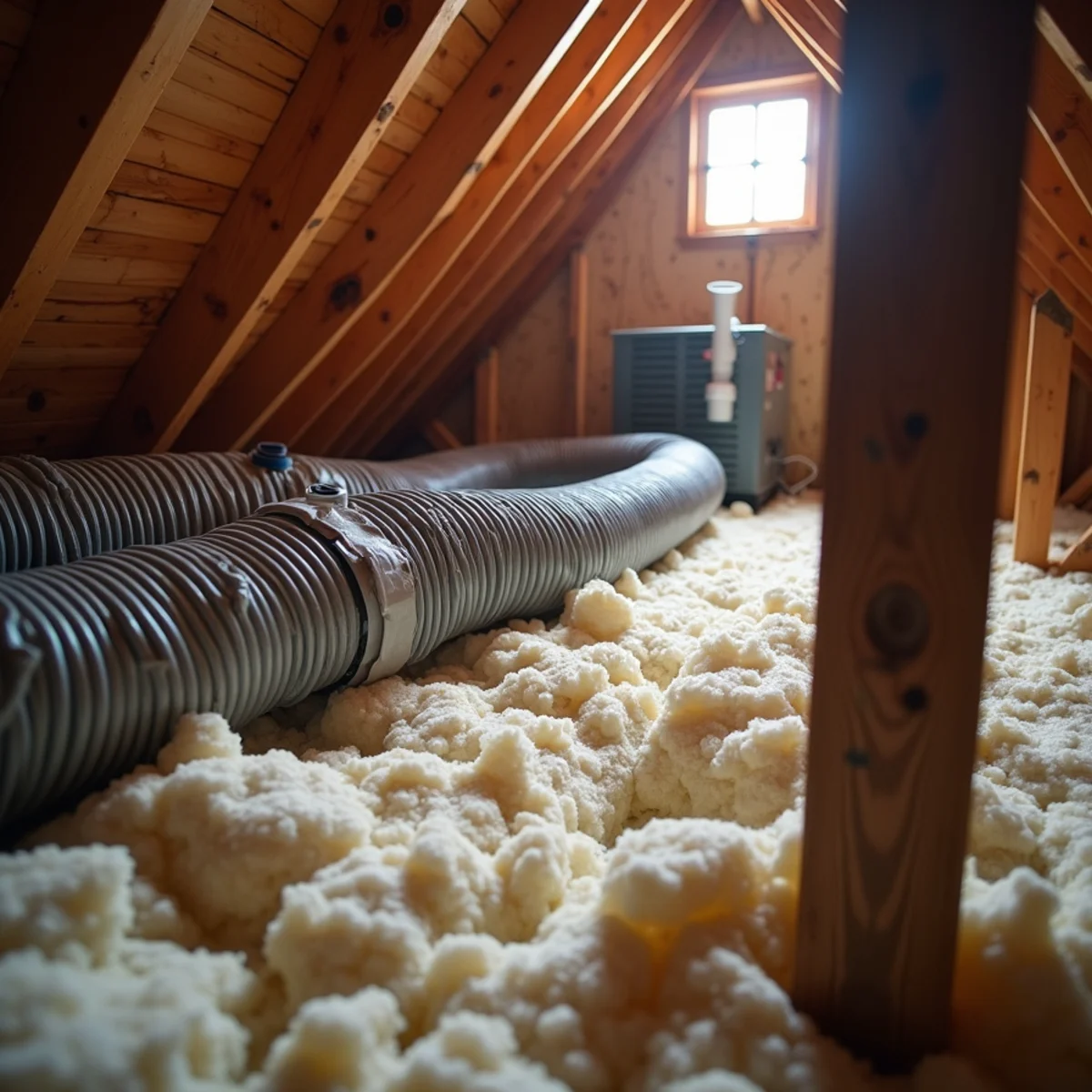
Signs of a ductwork problem
Ducts are out of sight, so the clues show up in the rooms:
- Rooms that never reach the thermostat setting, usually upstairs or at the far end of the house
- Strong airflow at some registers and barely a breath at others
- A system that runs nonstop on hot afternoons and still falls behind
- Dust that returns a day after cleaning, or dark streaks around registers
- A musty smell at startup, especially from a crawl space system
- Sweating registers or ceiling stains near supply vents in summer
A weak capacitor or low refrigerant charge can also leave rooms warm, so the technician checks the equipment before blaming the ducts. If cooling is weak in every room, start with AC repair or the safe checks for an AC that is not cooling.
Hot upstairs, cold downstairs: airflow in two-story Kennesaw homes
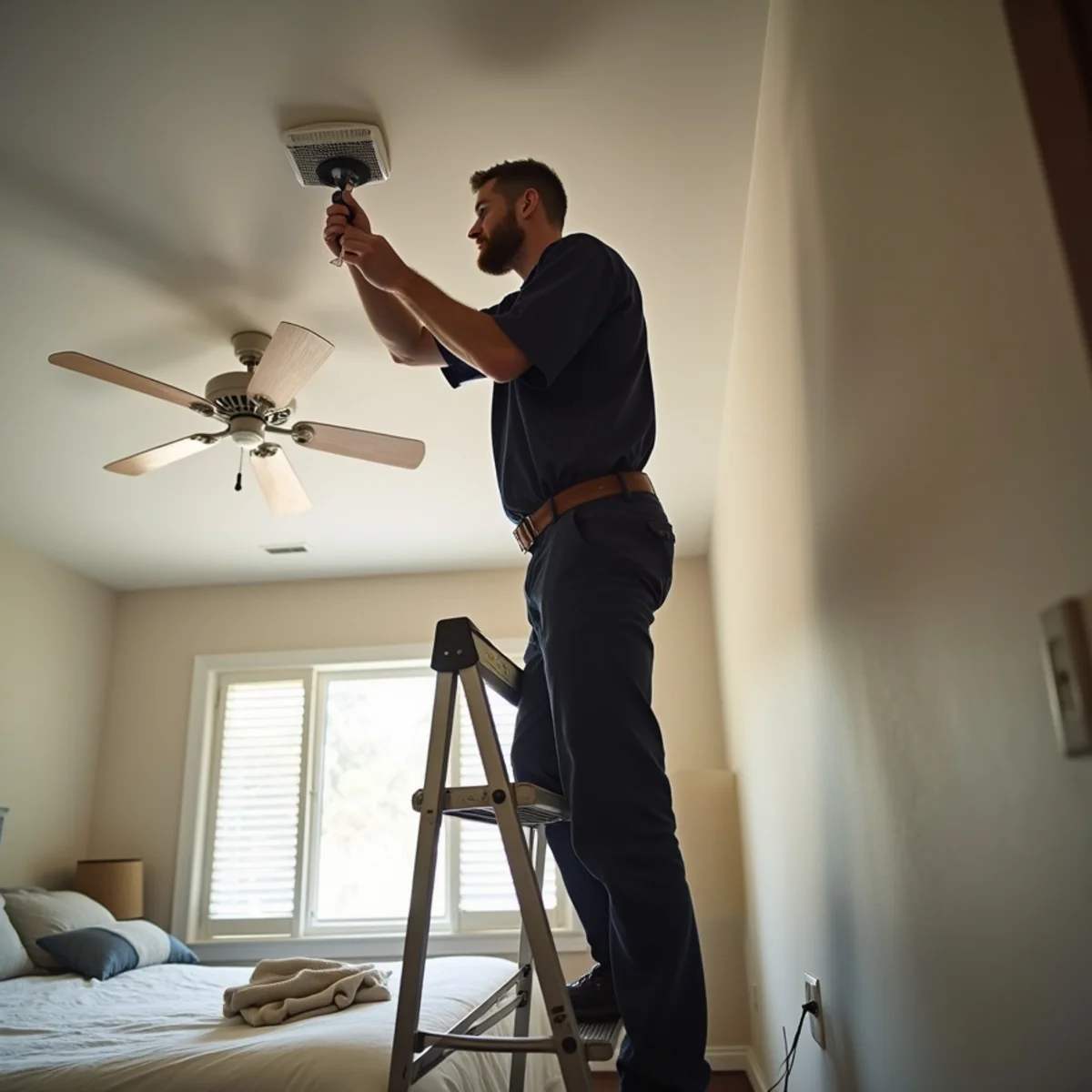
Kennesaw subdivisions are full of two-story homes from the late 1990s and 2000s, and most have a warmer second floor. Part of that is physics. Much of it is duct design.
Why the second floor runs hot
- The attic bakes the rooms below it. On a July afternoon the attic runs far hotter than the yard.
- Long supply runs through that attic. Leaky or thinly insulated duct warms the air before it reaches the bedroom.
- Too few returns. With bedroom doors closed and one central return in the hall, rooms pressurize and supply air struggles to get in.
- One thermostat for two floors. The downstairs thermostat is satisfied long before the bedrooms are.
What usually helps
Sealing and insulating attic ducts, adding a return or transfer grille to closed-off bedrooms, resetting balancing dampers, and in some homes zoning or a separate upstairs system. Our guide on why the upstairs is so hot in a two-story home explains each option. It is also the complaint we hear most from Towne Lake and other Woodstock neighborhoods.
Leaky, crushed and disconnected flex duct in attics and crawl spaces
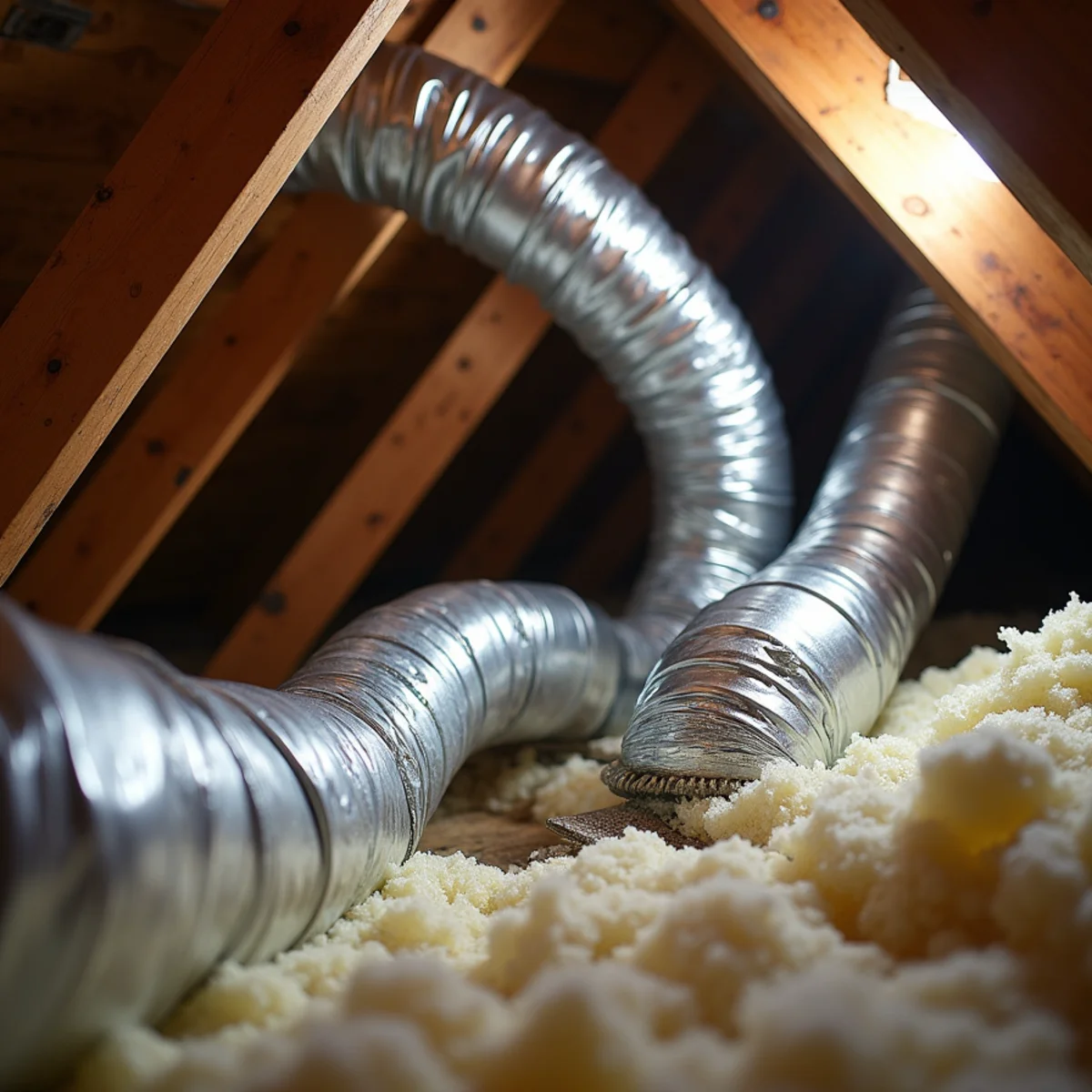
Most homes built here since the 1990s use flex duct: a plastic liner wrapped in insulation and a foil or plastic jacket. It works well when run straight, supported and sealed. Twenty years in a Georgia attic is hard on it.
- Sagging. Unsupported spans droop into bellies that choke airflow.
- Crushing and kinks. Storage boxes, insulation crews or tight bends at a boot can cut a room's air to a trickle.
- Disconnections. Straps loosen, liners slip off their collars, and a bedroom supply ends up cooling the attic.
- Torn jackets. Humid attic air reaches the cold liner, the duct sweats, and the insulation soaks through.
- Leaky returns. A gap on the return side pulls hot, dusty attic air into the system, past the filter.
Crawl space ducts
Crawl space ducts share these problems plus ground moisture, and a disconnected run under the floor draws musty air into the house. Older homes near the Marietta historic districts often have mixed metal and flex systems added in pieces over the decades.
Duct sealing, insulation and replacement options
Sealing
Joints and collars are sealed with duct mastic or approved foil tape, not cloth duct tape, which lets go in attic heat. The joints at the air handler and plenums matter most. A duct leakage test pressurizes the system and measures escaping air, before and after.
Insulation
Attic supply ducts need full insulation so cooled air arrives cool and the duct does not sweat. Many older homes have thinner duct insulation than current energy codes call for.
Replacement
When flex duct is brittle, flattened or soaked, sealing it is wasted effort. New runs let the contractor correct sizes, add returns and route ducts straight, following ACCA Manual D. If you are planning AC installation or replacement, have the ducts evaluated at the same visit; a new system on leaky ducts will not deliver its rated efficiency.
Repairing the ducts you have is usually the first step. Replacement makes sense when the duct itself has failed, not just its joints.
Zoning, dampers and air balancing
Tight ducts can still send air to the wrong rooms. Balancing and zoning fix the distribution.
Balancing dampers
Many branch ducts near the air handler have a small lever: a balancing damper. The technician measures airflow at the registers and sets the dampers so each room gets its share. Some two-story homes shift them toward the upstairs in summer and downstairs in winter. Closing supply registers is not the same thing; it raises duct pressure and pushes more air out of the leaks.
Zoning
Zoning uses motorized dampers, a thermostat for each floor and a control panel, so one system serves two floors more evenly. It must be designed around the equipment, because a single-speed system can push too much air into one small zone. Two-stage or variable-speed equipment is a better match.
Two systems, still hot upstairs
If you already have separate units and the upstairs still lags, the cause may be missing returns, attic duct losses or an undersized upstairs system. Measurements show which.
Humidity, pollen and indoor air quality: filtration, UV lights and dehumidifiers
In Kennesaw the two biggest air quality factors are spring pollen and summer humidity.
Filtration
A cabinet holding a 4 or 5-inch media filter catches more pollen with less restriction than a dense 1-inch filter. Sealing return ducts matters just as much, since a leaky return lets attic dust skip the filter. Our HVAC maintenance page covers filter sizes and change schedules.
UV lights
UV lamps near the indoor coil help limit mold growth on the coil and drain pan, which stay wet all summer. They do not clean ducts or stop leaks, and the lamps need periodic replacement.
Whole-home dehumidifiers
Your AC removes moisture only while it runs. In muggy spring and fall weather, or with an oversized system that short-cycles, humidity stays high. A ducted dehumidifier dries the house without overcooling it, which helps most in homes with basements or crawl spaces.
Visible mold on ducts or the air handler should be assessed by a mold specialist first. Sealing over it does not solve it.
What's included in a duct inspection and repair
Duct work starts with finding out where the air goes, because guessing leads to sealing the easy joints and missing the big leak behind the air handler. A duct visit covers:
- Room-by-room airflow. Supply temperatures and airflow at the registers, upstairs and down, compared with what each room needs.
- Static pressure. A pressure reading across the system that shows whether ducts and filters are choking the blower.
- Attic and crawl space inspection. Every reachable run checked for kinks, sags, crushed sections, torn jackets, disconnected boots and loose plenum joints.
- Return air check. Whether the upstairs has enough return capacity, a common gap in two-story homes built in the 1990s and 2000s.
- Sealing with the right materials. Joints sealed with mastic or UL 181 rated foil tape, not cloth duct tape that dries out and falls off in attic heat.
- Insulation repair. Torn or missing jacket replaced so cold ducts stop sweating in humid summers.
When numbers matter, such as before and after a sealing job, a duct leakage test measures the leak rate with a calibrated fan and pressure gauge. ENERGY STAR estimates that a typical home loses 20 to 30 percent of the air moving through its ducts to leaks and poor connections.
How duct repair works, step by step
- Call (321) 478-0693. Describe the symptom: hot rooms, weak vents, dusty air, sweating ducts or a high bill, and which floor it affects.
- Measure first. The technician takes temperatures and pressures with the system running, so the fix targets the real restriction or leak.
- Inspect the runs. Attic and crawl space ducts are traced from the air handler to each problem room.
- Options and price. You get the findings and a written price for each option, from sealing and strapping a few runs to adding a return or replacing a section of duct.
- Repair. Runs are reconnected, straightened and supported, joints are sealed with mastic or UL 181 tape, and damaged insulation is replaced.
- Re-measure. Airflow and temperatures are checked again so you can see the change, not just hear about it.
What affects ductwork repair cost
The price is quoted after the technician has seen your system. The main factors:
- Access: a decked attic is quicker work than a low attic, a tight crawl space or ducts in finished ceilings
- Scope: resealing a few joints versus replacing every run
- Materials: flex or rigid duct, insulation, mastic, new boots or plenums
- Testing and design: leakage tests and airflow readings show what actually needs fixing
- Add-ons: zoning, a new return, a media filter cabinet, UV lamps or a dehumidifier
- Equipment age: an aging system may make pairing duct work with a replacement the smarter move
You hear the price before work starts. Every HVAC contractor we send is licensed and insured in Georgia.
We cover Kennesaw, Acworth, Woodstock, Marietta and the rest of our service area. Call (321) 478-0693 to have your ducts checked.
Why Choose Hooten Air Pros for Duct Repair in Kennesaw
Most hot-upstairs complaints in Kennesaw are solved in the attic, not by buying a bigger air conditioner. Here is what you can count on.
Measured before and after
Temperatures and static pressure are taken before any repair and again after it, so the improvement is something you can see.
Ducts before equipment
If the ducts are the problem, you hear that before anyone recommends a new system, which can save the cost of an unneeded replacement.
Licensed and insured contractors
Every HVAC contractor we send is licensed and insured in Georgia. Duct changes that affect airflow and returns are made by the same HVAC contractors who know the equipment, not a general handyman.
Two-story homes are the specialty here
Long attic runs to upstairs bedrooms, single small returns and sagging flex duct are the everyday problems in Kennesaw, Acworth and Woodstock subdivisions.
Straight talk on duct cleaning
Duct cleaning is not our core service, and we will tell you when sealing and airflow fixes matter more.
Ductwork Repair and Airflow Across Kennesaw and Nearby Cities
Calls come in from all over our HVAC service area around Kennesaw. These are the cities we hear from most for duct repair:
We also cover Powder Springs, Canton and Dallas.
Ductwork Repair and Airflow FAQs
Why is my upstairs always hotter than downstairs?
Upstairs rooms sit under a hot attic, so they gain heat fastest, and the ducts feeding them usually run through that same attic. Leaky or crushed flex duct, too few return vents and a single thermostat downstairs all make it worse. Closed bedroom doors can choke airflow when a room has no return of its own. The fix depends on what a technician measures: sealing ducts, adding returns, balancing dampers or zoning. Our guide to why the upstairs is so hot goes deeper.
How do I know if my ducts are leaking?
Common clues are rooms that never cool down, weak airflow at some registers, heavy dust, rising summer bills and a system that runs constantly. In the attic you may spot flex duct lying on the insulation with a gap at a collar, a torn jacket or a run that has slipped off its fitting. Only look from the attic decking, and never step between the joists. The surest answer is a duct leakage test, which pressurizes the ducts and measures what escapes. Call (321) 478-0693 to have one done.
Is duct sealing worth it on a 20-year-old home?
Often, yes. A home built around 2005 has spent twenty Georgia summers with its ducts in a hot attic, and straps, tape and jackets all age. Sealing the main joints and reconnecting loose runs is usually one of the more cost-effective comfort fixes, because it puts air you already paid to cool back into the rooms. If the flex duct itself is brittle or crushed, replacing it may be the better choice. A technician can test the system and show you what they find before you decide.
Do you clean ducts or only repair them?
Our focus is duct repair, sealing and airflow. Duct cleaning is not a core service we dispatch for. Cleaning does help in specific cases: after construction or remodeling dust, after rodents or insects have gotten into the ducts, or when debris is visibly blocking registers. Visible mold should be assessed by a mold specialist first. For most Kennesaw homes with dust and comfort complaints, sealing leaky returns and fixing disconnected runs does more, because it stops attic dust from being pulled in to begin with.
What is a duct leakage test?
A duct leakage test measures how much air your ducts lose. The technician seals off the supply and return grilles, connects a calibrated fan to the duct system and pressurizes it, then reads the leak rate on a pressure gauge. It is most useful before and after a sealing job, or when deciding whether ducts can be sealed or should be replaced. A visual inspection alone can miss leaks hidden behind insulation and at the air handler.