Signs your furnace needs repair
Most detached Kennesaw homes heat with natural gas, and those furnaces sit quiet from March to November. The first nights near freezing are when hidden problems surface. Watch for:
- No heat at all, or the furnace tries to start and gives up
- Cold or lukewarm air from the registers while the system runs
- Repeated clicking without a flame, or a flame that lights and goes out a few seconds later
- Short cycling, with the burners turning on and off every few minutes
- New noises: squealing, scraping, rattling or a loud bang at ignition
- A burning smell that lasts beyond the first few minutes of the season
- Your CO alarm sounding, or headaches and nausea that ease when you leave the house
A dusty smell on the first run of fall is normal and burns off quickly. Anything that lingers or smells like gas is not.
If the heat simply will not come on, our guide on what to check when the furnace is not turning on covers the thermostat, filter and wall service switch checks that are safe for homeowners.
Safety warning: If you smell gas or a CO alarm goes off, leave the house now. Call 911 or the gas utility from outside, then call us. Do not flip switches or try to relight anything.
No heat or furnace will not ignite: igniters, flame sensors and gas valves
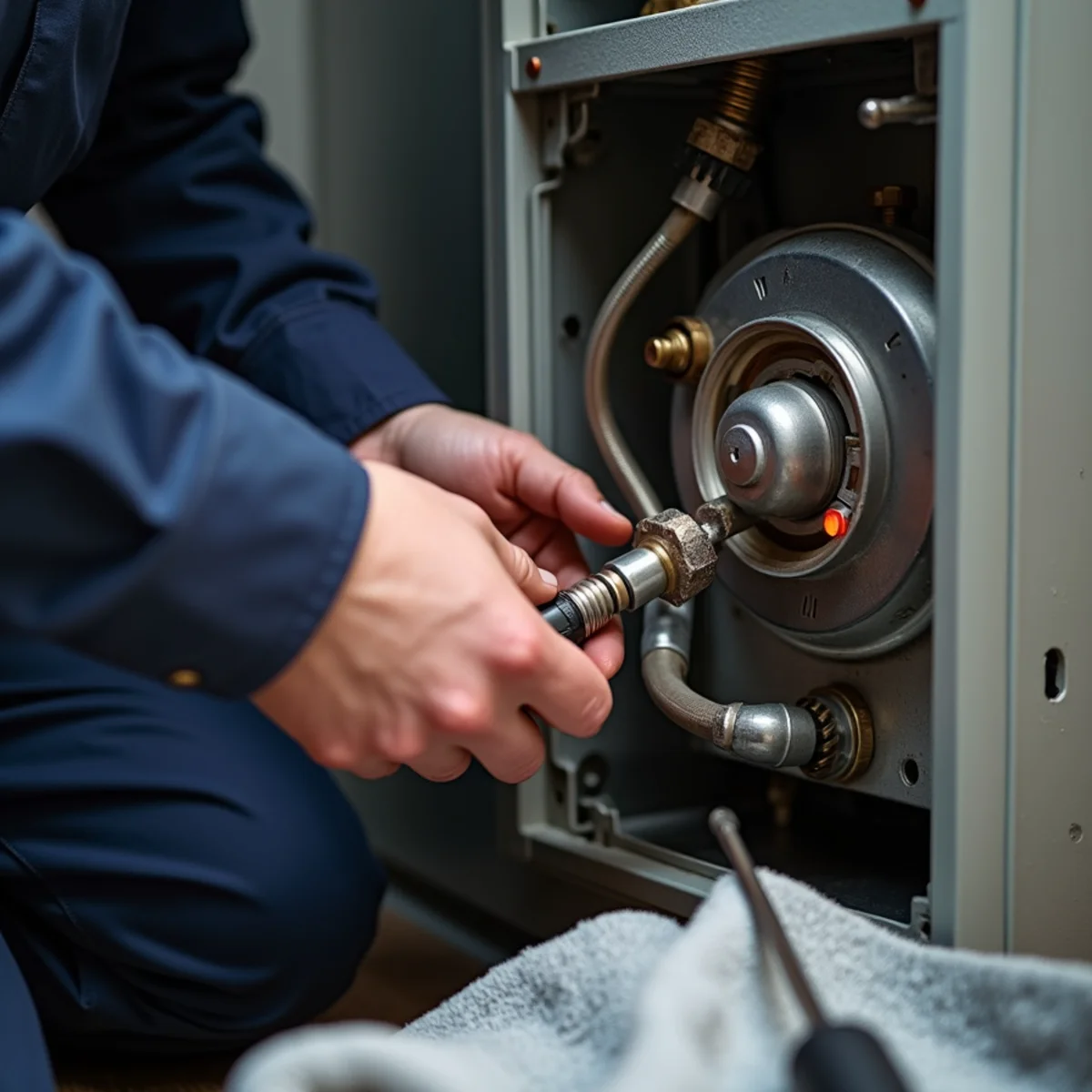
A modern gas furnace lights in a strict order, and each step must prove itself before the next. When a furnace is not igniting, the technician walks this sequence to find where it stops.
- The thermostat calls for heat.
- The inducer motor starts. This small fan pulls exhaust out through the vent pipe.
- The pressure switch closes. It confirms draft. A blocked vent, cracked hose or failing inducer stops the furnace here.
- The hot surface igniter glows.
- The gas valve opens and the burners light.
- The flame sensor proves the flame. If it cannot, the control board shuts the gas off for safety.
- The blower starts after a short delay and sends warm air through the ducts.
Igniter replacement
Hot surface igniters are brittle and wear with every cycle. A cracked or weak igniter is a very common cause of no heat, and the technician tests it before replacing it.
Flame sensor cleaning
The flame sensor is a thin metal rod in the burner flame. A coating builds on it over the seasons until the signal is too weak to read. The classic symptom is a furnace that lights, runs for a few seconds, then shuts off and tries again. Cleaning or replacing the sensor usually solves it.
Gas valves, inducers and control boards
Less often, the gas valve fails to open, the inducer motor bearings seize, or the control board itself fails. A technician confirms each with meters first, because these parts cost more and are easy to misdiagnose.
Short cycling, weak airflow and blower motor problems
A furnace that starts and stops every few minutes is often protecting itself. The high limit switch trips because heat is not leaving the heat exchanger fast enough, so the burners shut down, cool off and try again.
Common reasons the heat cannot get out:
- A filter packed with dust or spring pollen that was never changed
- Closed supply registers or furniture blocking return grilles
- A dirty blower wheel, where caked dust cuts airflow badly
- A failing blower motor or the capacitor that helps it run
- Crushed or disconnected duct runs in the attic or crawl space
Blower motor repair
Older furnaces use a single-speed PSC blower motor with a run capacitor. Many newer ones use a variable-speed ECM motor with its own electronics module. Trouble shows up as a humming motor that will not turn, a burning electrical smell, squealing bearings, or a motor that starts and quits. The technician tests the capacitor, windings and module before recommending a fix.
Short cycling that started on day one
If the furnace has cycled on and off since the day it was installed, the cause may be the equipment itself. An oversized furnace heats the space near the thermostat in a few minutes and shuts off before the rest of the house catches up. A thermostat mounted near a supply register, a sunny window or a kitchen can do the same thing. The technician checks the furnace's rated output against the home before blaming a part.
When the problem is the ducts
If the furnace checks out and some rooms still run cold, the ducts are next, especially long attic runs feeding the upstairs. Our ductwork repair and airflow service handles leaks, crushed flex duct and balancing.
Cracked heat exchangers, carbon monoxide and when a furnace must stay off
The heat exchanger is the metal chamber that keeps combustion gases separate from the air you breathe. Years of heating and cooling make the metal expand and contract, and eventually it can crack or rust through. A breach can let exhaust, including carbon monoxide, mix into the airflow going to your rooms.
Signs a technician looks for:
- Flames that roll out of the burner area or dance when the blower starts
- Soot or scorching around the burners or the furnace cabinet
- A tripped rollout switch, which shuts the furnace down when flame escapes where it should not
- Rust, cracks or holes found with a camera or mirror inspection
- High CO readings in the supply air or near the furnace
Safety warning: If a technician finds a cracked heat exchanger or dangerous CO levels, the furnace should stay off. They will shut it down and explain why. Running it to get through one more night is not worth the risk.
Every home with a gas furnace should have working CO alarms on each sleeping level. A heat exchanger crack on an older furnace usually tips the decision toward replacement, since the part is a large share of the furnace itself.
Attic and crawl space furnaces in Kennesaw two-story homes
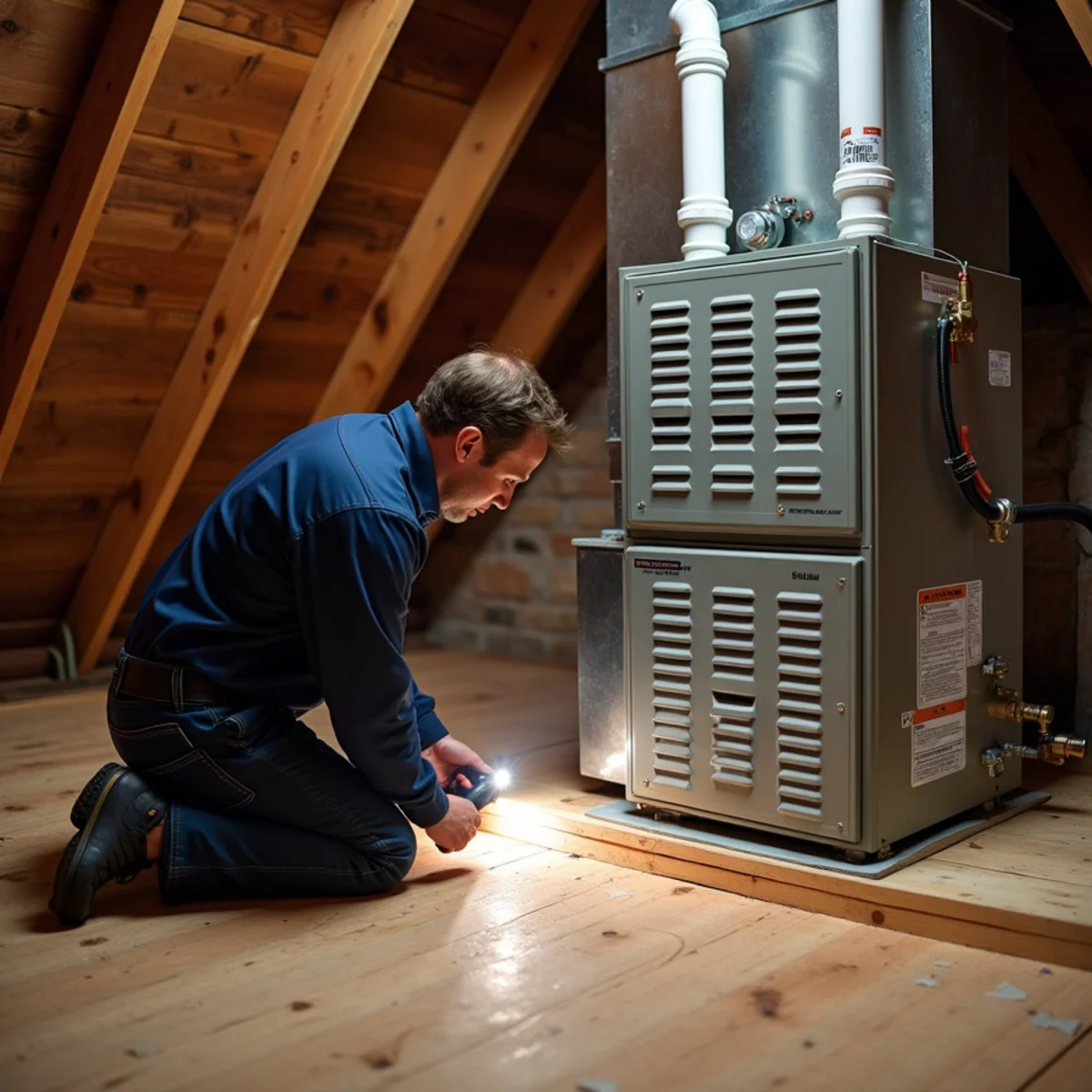
Two-story subdivision homes around Kennesaw often have two systems: one furnace in a garage, basement or closet, and an upstairs furnace laid on its side in the attic. Some older homes use a crawl space instead. Location changes how a furnace fails:
- Attic furnaces sit in an unconditioned space that swings from summer heat to winter cold. Wiring, controls and the condensate drain on high-efficiency models take more stress.
- High-efficiency furnaces make water as they burn. In an attic, a drain line or trap that freezes during a hard cold snap can trip the pressure switch and stop the heat. The December 2022 arctic blast that took metro Atlanta into single digits showed how quickly that happens.
- Crawl space furnaces deal with damp air, rust on cabinets and burners, and tight access that makes inspection harder.
Older homes around historic Marietta often have tight crawl space units, while the 2000s subdivisions in Acworth and two-system homes in Woodstock lean toward the attic-plus-closet setup. We cover all of these across our service areas around Kennesaw, and a yearly fall furnace check catches an attic unit's weak spots before the first freeze.
What's included in a furnace repair visit
A furnace call is part repair and part safety check. Whatever the reason for the visit, the technician covers:
- Ignition and flame. Igniter resistance, flame sensor signal, burner condition and how the flame looks across every burner.
- Draft and venting. The inducer motor, pressure switch and hoses, and the flue or PVC vent pipes for blockage, separation or water.
- Gas supply. The gas valve and, when the symptoms call for it, manifold gas pressure.
- Safety controls. High limit, rollout switches and the furnace door switch, each tested rather than assumed.
- Airflow and temperature rise. Filter, blower and the difference between supply and return air, which shows whether the furnace is heating within its rated range.
- A visual heat exchanger check where it can be seen, plus a carbon monoxide reading when anything looks or smells wrong.
You get the findings and the repair price before work starts. If the furnace is unsafe to run, the technician explains why and leaves it off; that is a safety call, not a sales tactic.
How a furnace repair visit works, step by step
- Call (321) 478-0693. Tell us whether there is no heat, cold air, short cycling, a smell or a noise, and whether the furnace is in the attic, basement, closet or crawl space.
- Dispatch. The nearest available licensed technician heads your way, and you get an arrival window on the call. On a hard-freeze night with many no-heat calls, windows can run longer.
- Read the board first. Most modern furnaces store a blinking fault code. The technician reads it, then confirms it with meter readings instead of trusting the light alone.
- Diagnose and price. You hear what failed, why, and what the repair costs, before any work begins.
- Repair and test a full cycle. After the repair, the furnace is run through complete heating cycles so the technician can watch ignition, flame, temperature rise and shutdown.
- Wrap up. Old parts and debris are cleared, and you hear what to watch for, such as a filter that needs changing or a drain line on a high-efficiency unit.
Repair or replace an aging furnace (and matching it to the AC)
Gas furnaces in Georgia typically last 15 to 20 years or more, since mild winters mean fewer run hours. Age alone is not a reason to replace one; a 17-year-old furnace with a new igniter may run well for years.
Replacement makes more sense when:
- The heat exchanger is cracked or rusted through
- The control board, gas valve and inducer have all needed work in recent years
- The furnace short cycles or cannot keep the house warm even after repairs
- Parts are hard to find for the model
- The AC on top of it is due for replacement anyway
That last point matters in Kennesaw. The furnace blower moves air for both heating and cooling, and the AC's indoor coil usually sits right on top of the furnace. Many homeowners replace both together so the coil, blower and outdoor unit are a matched system. Our AC installation and replacement page covers that decision, and our piece on repairing or replacing an older AC explains how refrigerant type plays in.
Every HVAC contractor we send is licensed and insured in Georgia.
What affects furnace repair cost
You get a written price after diagnosis and before any repair, because the number depends on what the technician finds. These are the factors that drive it:
- Which part failed. A flame sensor cleaning or igniter replacement is a small job. An inducer motor, blower motor, gas valve or control board is larger. A heat exchanger is the largest and often points to replacement.
- Furnace type. Single-stage, two-stage and modulating furnaces use different parts, and variable-speed blower motors cost more than older single-speed ones.
- Location and access. A furnace in a garage is quick to reach. One in a cramped attic or a low crawl space takes more time.
- Part availability. Common parts are often on the truck. Model-specific boards or motors may need ordering.
- Time of the call. Night, weekend and holiday calls can carry after-hours rates, and you hear about that before dispatch.
- Manufacturer coverage. Some parts may still be under the manufacturer's warranty; labor typically is not.
Why Choose Hooten Air Pros for Furnace Repair in Kennesaw
A dead furnace in January is a safety issue as much as a comfort one. Here is what you can count on when you call us for furnace repair.
A person answers on the coldest nights
Furnaces tend to quit on the first cold snap or after midnight. Calls to (321) 478-0693 are answered 24/7, and a technician is dispatched with an arrival window you hear on the call.
Licensed and insured for gas work
Every HVAC contractor we send is licensed and insured in Georgia. Gas furnace repair involves gas valves, venting and combustion, which is licensed conditioned air work in Georgia, not a job for a handyman.
Carbon monoxide and safety come first
If a cracked heat exchanger, a blocked vent or a failed safety control makes the furnace unsafe, you are told plainly and the furnace stays off until it is fixed.
Measured, not guessed
Flame signal, temperature rise and pressure switch readings point to the real cause, so a flame sensor problem is not sold as a new control board.
Honest repair-or-replace advice
On a 20-year-old furnace, you get both prices and a frank view of what is likely to fail next, including whether the furnace should be matched to a new AC.
Furnace Repair Across Kennesaw and Nearby Cities
Calls come in from all over our HVAC service area around Kennesaw. These are the cities we hear from most for furnace repair:
We also cover Powder Springs, Canton and Dallas.
Furnace Repair FAQs
Why is my furnace blowing cold air?
First check that the thermostat fan is set to Auto, not On. With On, the blower runs between heating cycles and pushes room-temperature air that feels cold. If the setting is right, the burners are probably shutting down. A dirty flame sensor, a failed igniter, a tripped high limit switch from a clogged filter, or a frozen condensate line on a high-efficiency furnace can all cause it. A technician can trace the ignition sequence and find which step is failing.
Is it safe to keep running a furnace that smells like gas or burning?
No. For a gas smell, leave the house right away, call 911 or the gas utility from outside, and do not use light switches or try to relight anything. Call us once the gas company says it is safe. A brief dusty smell on the first cold day is normal. A burning plastic or electrical smell that lasts is not; turn the furnace off at the thermostat and have a technician check the blower motor and wiring before using it again.
How long does a gas furnace last in Georgia?
A gas furnace in Georgia typically lasts 15 to 20 years or more. Mild winters mean fewer heating hours than in northern states, which helps. Lifespan drops when filters go unchanged, when the furnace was oversized and short cycles, or when it sits in a damp crawl space or hot attic. The heat exchanger is the real limit. Once it cracks, replacement is usually the sensible choice. Yearly maintenance helps you get the full service life.
Can someone come out at night if the heat goes out?
Yes. Calls to (321) 478-0693 are answered 24 hours a day, including nights, weekends and holidays. We dispatch the nearest available licensed technician and give you an arrival window when you call. After-hours rates may apply, and you will hear about them before anyone is sent. If the temperature is dropping fast and there are infants, older adults or anyone with health concerns in the home, mention it. Our 24/7 emergency HVAC repair page explains how night calls work.
Why does my furnace keep turning on and off?
That is called short cycling. The usual causes are a clogged filter or blocked returns that trip the high limit switch, a dirty flame sensor that loses the flame signal, a thermostat placed near a heat source, or a furnace that is too large for the home. A failing pressure switch or inducer can also stop the cycle early. Change the filter first; if it keeps happening, have it tested before it wears out the igniter.