Heat pump problems we repair
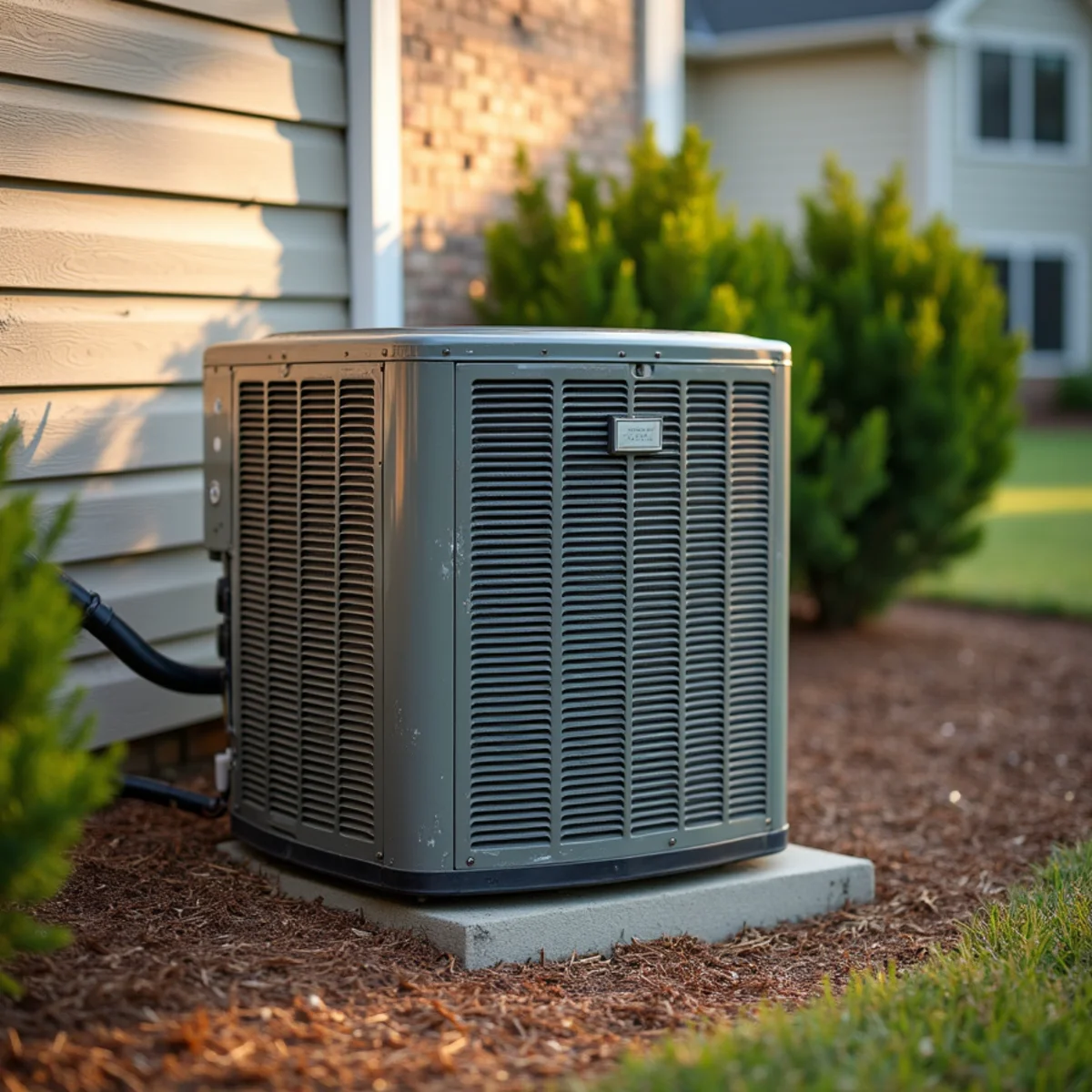
A heat pump is an air conditioner that can run in reverse, pulling heat from outdoor air in winter and moving it inside. Because one outdoor unit does both jobs, it runs nearly year-round. The heat pump service calls we see most:
- Heat pump not heating, or blowing air that feels cool in heat mode
- Ice covering the outdoor coil that never clears
- Stuck in defrost, or never going into defrost at all
- "AUX" or "EM HEAT" showing on the thermostat far more than usual
- Power bills that jump during a cold month
- No cooling in summer from a failed capacitor, contactor or refrigerant leak
- The outdoor fan not spinning while the compressor hums
Many cooling-season faults are the same as on a standard AC. Our AC repair page covers capacitors, contactors and drain clogs in depth, and the homeowner checks in our AC not cooling guide apply to a heat pump in cooling mode too.
Blowing cold air in heat mode: defrost cycle or a real fault
This is the most common worry from heat pump owners, and often it is normal.
What normal feels like
Heat pump air is warm but not as hot as gas furnace air, so it can feel cool against your hand even when the system is heating correctly. Heat pumps run longer, gentler cycles.
What defrost looks like
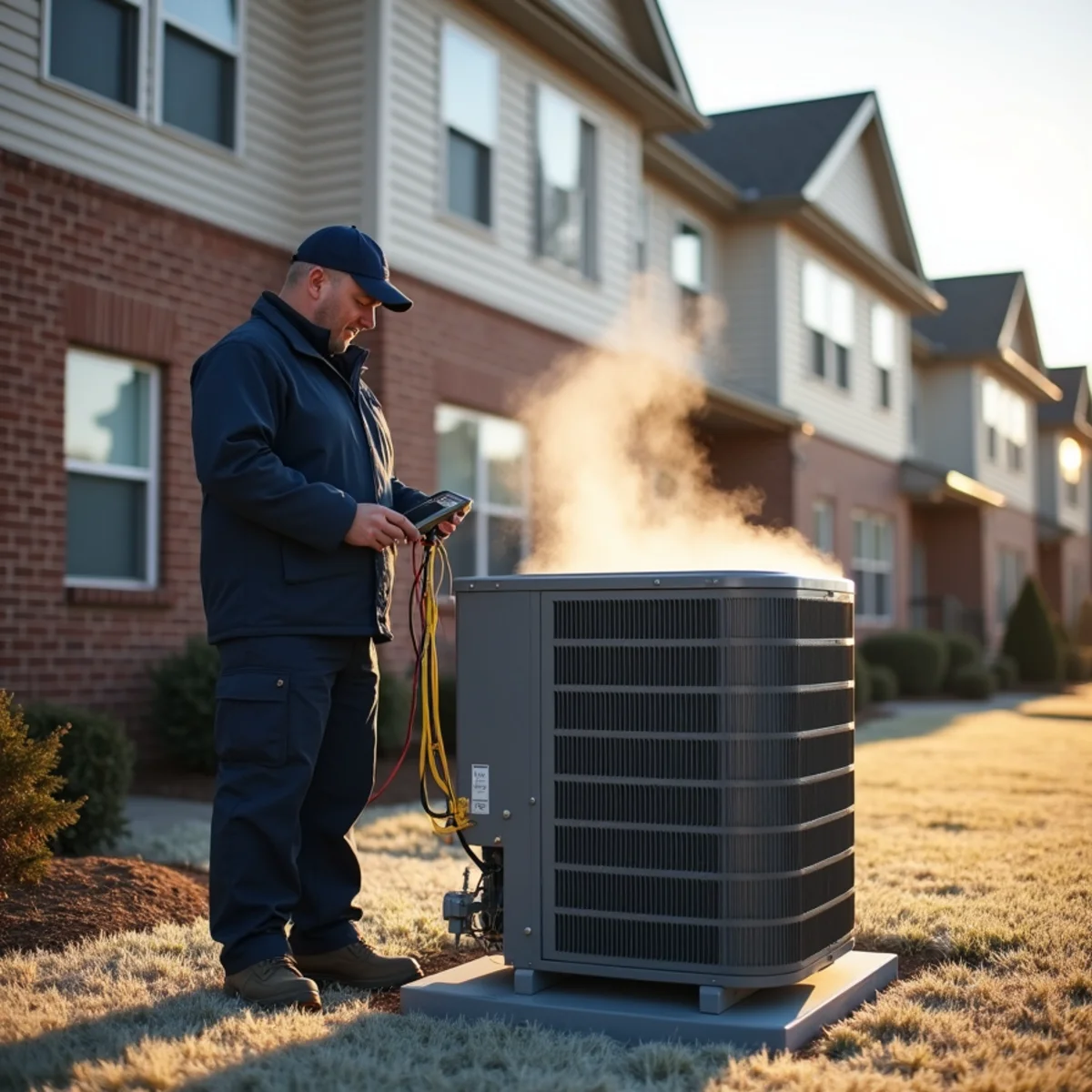
When the outdoor coil collects frost, the heat pump briefly switches into cooling mode to warm the coil and melt it. During those few minutes the outdoor fan stops, you may see steam rising, and you may hear a whoosh as the reversing valve shifts. Inside, backup heat usually tempers the air, but you may feel a short burst of cooler air.
When it is a real fault
- Cool air for long stretches, not just a few minutes
- The outdoor unit is not running while the indoor fan blows
- The house keeps losing temperature
Those point to a failed reversing valve, a defrost problem, a low refrigerant charge, a bad compressor or a thermostat wiring issue.
Iced-over outdoor units, reversing valves and defrost board failures
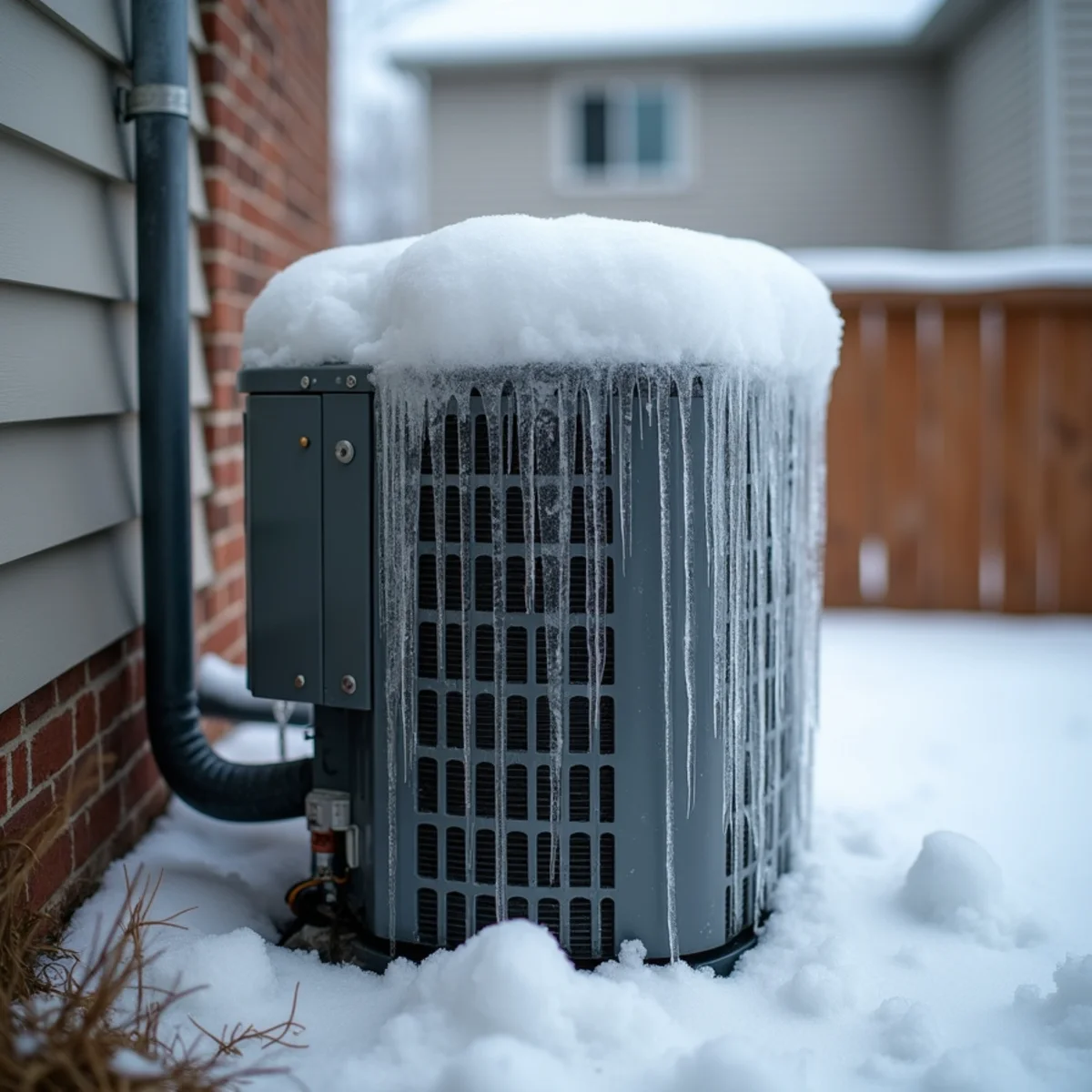
Light frost on the outdoor coil in winter is normal. A solid block of ice is not: it insulates the coil, so backup heat ends up doing all the work.
Defrost controls
The defrost control board decides when to defrost, using a coil temperature sensor and often run time or outdoor temperature. A failed sensor, a loose sensor clip or a bad board can keep the unit from ever defrosting. The technician tests both before replacing anything.
Reversing valve
The reversing valve is the part that makes a heat pump a heat pump. An electrical solenoid shifts it to redirect refrigerant between heating and cooling. A burned-out solenoid coil is a straightforward repair. A valve that sticks or leaks internally is a major brazed repair and often a turning point on an older system.
Other ice causes
- Low refrigerant charge from a leak
- An outdoor fan motor that has stopped
- Gutters dripping straight onto the unit, then freezing
- A unit sitting too low, where melt water refreezes around the base
Safety warning: Do not chip ice off the coil with a tool or pour hot water over it. The thin aluminum fins and copper tubes damage easily. Switch the thermostat to emergency heat and call for service.
Auxiliary and emergency heat: why the electric bill jumps
Most heat pumps here have electric resistance heat strips in the indoor air handler. They work like a large toaster element and use far more electricity than the heat pump to make the same heat.
Auxiliary heat versus emergency heat
- Auxiliary heat comes on automatically during defrost, on very cold nights, or when you raise the setpoint several degrees at once.
- Emergency heat is a manual setting that locks out the heat pump and runs only the strips. It is for when the outdoor unit is broken.
Signs the strips are carrying too much of the load
- "AUX" shows on the thermostat for hours at a time in mild weather
- The electric bill climbs sharply without a cold snap to explain it
- The thermostat was left on emergency heat by mistake
The cause is often low charge, a defrost problem or a failing compressor. It can also be a thermostat not configured for a heat pump. Small setpoint changes, rather than big jumps, help keep the strips off.
Heat pumps in Kennesaw townhomes, rentals and all-electric homes
Most detached Kennesaw houses heat with gas, but heat pumps are common in townhome communities, apartments and student rentals near Kennesaw State University, and all-electric homes. That brings specific patterns:
- Tight equipment spaces. Townhome air handlers often sit in a small closet, and outdoor units line up close together, so clearances matter.
- Landlords and property managers. A clear written diagnosis and price helps when the owner is remote and a tenant is home.
- Long run hours. Running both seasons, heat pumps typically last 10 to 15 years.
We cover rentals and owner-occupied homes alike across Kennesaw, heat pump homes in Acworth, Woodstock and Towne Lake and Marietta and East Cobb, plus the rest of our Kennesaw-area service areas. Seasonal HVAC maintenance twice a year makes sense for a heat pump, since it works both seasons.
Dual fuel: pairing a heat pump with a gas furnace in North Georgia
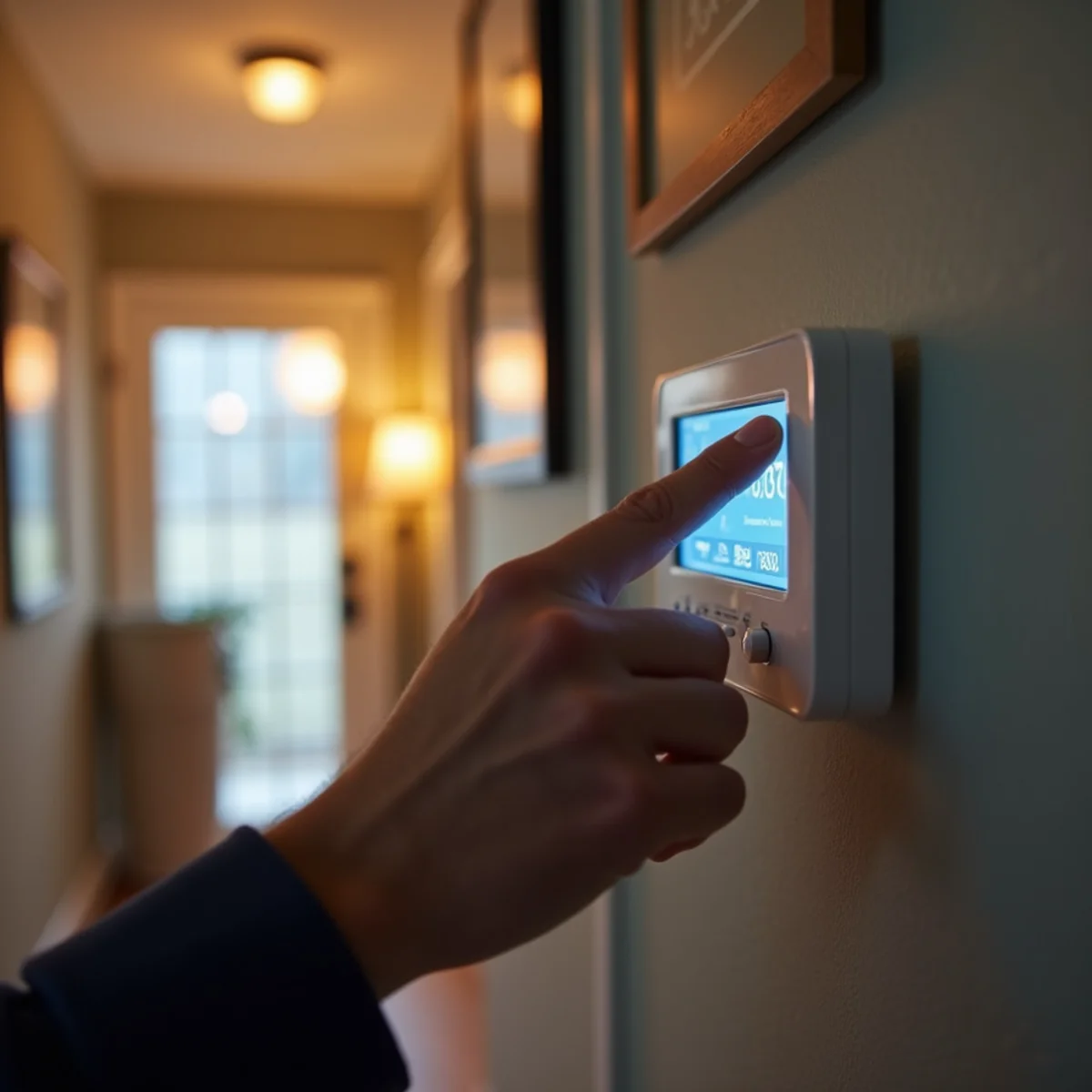
A dual fuel system uses a heat pump for cooling and for heating in mild weather, then hands off to a gas furnace when it gets cold. The furnace replaces the electric heat strips as the backup.
Why it works here
Kennesaw winter lows average in the low 30s, weather a heat pump handles efficiently. On the handful of truly cold nights, such as the December 2022 arctic blast that pushed metro Atlanta into single digits, the gas furnace takes over and delivers hot air without the heat pump straining.
How the switch happens
The control uses a changeover point based on outdoor temperature: above it the heat pump runs, below it the furnace runs. The right setting depends on the house, equipment and utility rates.
Who it suits
Dual fuel fits homes that already have natural gas and are replacing an AC and furnace together. If your old AC and furnace are both near the end, ask about it during your AC installation and replacement estimate. If you are keeping your furnace for now, our furnace repair service covers the gas side.
What's included in a heat pump repair visit
A heat pump has to be checked in both directions, because a system that cools fine in September can still fail in heat mode. A repair visit covers:
- Both operating modes. The technician runs the system in heat and in cool, confirms the reversing valve shifts cleanly, and measures the temperature change at the indoor coil in each mode.
- Defrost controls. The defrost board, the coil sensor and, when the weather allows, a forced defrost cycle to prove the unit clears its own ice.
- Backup heat. The electric heat strips, their sequencers or relays and their amp draw, plus how the thermostat calls for auxiliary and emergency heat.
- Refrigerant charge. Pressures and temperatures compared with the manufacturer's charging data, since a low charge shows up first as weak heat on cold mornings.
- Outdoor unit health. Coil cleanliness, fan motor and blade, capacitor, contactor, and whether the unit sits high enough to drain meltwater.
- Thermostat setup. Many comfort complaints come from a thermostat wired or configured for a gas furnace instead of a heat pump.
How a heat pump repair visit works
- Call (321) 478-0693. Tell us what you see: cold air from the vents, ice that never clears, the thermostat stuck on "aux" or "em heat", a loud noise, or a high bill.
- Dispatch. The nearest available licensed technician is sent, and you get an arrival window on the call.
- Watch it run. The technician observes a heating cycle and, in winter, a defrost cycle before taking anything apart, because many heat pump complaints are normal operation that only looks wrong.
- Test and diagnose. Readings in both modes narrow the problem to a part, the charge, airflow or the thermostat setup.
- Price before work. You hear what failed, the repair price and, on an older R-22 system, what a replacement would involve, before anything is done.
- Repair and confirm. After the repair, the system is run in heat and cool, and backup heat is checked so the electric bill does not surprise you next month.
Repair or replace, and what affects the cost
Many heat pump repairs are modest. Capacitors, contactors, defrost sensors and solenoid coils are routine. The harder decisions come with compressor failures, reversing valve replacements, major refrigerant leaks and older systems running R-22.
When heat pump replacement deserves a look
- The system is past 10 to 15 years and needs a major repair
- It uses R-22, which has not been produced in the U.S. since 2020
- Auxiliary heat runs constantly even after repairs
- You want to add dual fuel or move to a higher-efficiency model
New split heat pumps must meet at least 14.3 SEER2 and 7.5 HSPF2, and new equipment is moving to R-454B and R-32 refrigerants. Our article on repairing or replacing an older system covers the refrigerant question in detail.
What affects the cost
- The failed part, from a sensor or capacitor to a reversing valve or compressor
- Refrigerant type and whether a leak has to be found and fixed
- Access to the air handler in a closet or attic and to the outdoor unit
- Timing, since after-hours calls can carry different rates
- Manufacturer coverage on parts, if any remains
- For heat pump installation: capacity from a load calculation, efficiency level, whether the air handler is replaced, line set condition, electrical needs and permit requirements
You always get the price in writing before work begins. Every HVAC contractor we send is licensed and insured in Georgia.
Why Choose Hooten Air Pros for Heat Pump Repair in Kennesaw
Heat pumps behave differently from a furnace and an AC, and a technician who treats them the same will chase the wrong problem. Here is what you can count on.
Normal operation is not billed as a repair
Steam during defrost, a whoosh when the reversing valve shifts and long winter run times are normal. The technician tells you when nothing is wrong.
Licensed, insured and refrigerant-certified
Every HVAC contractor we send is licensed and insured in Georgia. Heat pump charge work requires EPA Section 608 certification, and charging in heat mode takes the manufacturer's data, not a guess.
Townhomes, rentals and dual fuel systems
From townhome rows near Kennesaw State University to dual fuel systems in Cobb County two-stories, the common heat pump setups here are everyday work.
Answered 24/7, with the price first
A heat pump stuck on emergency heat during a freeze gets the same 24/7 answer as a no-heat call, and you hear the price before work starts.
Straight advice on R-22 heat pumps
An early-2000s heat pump with a leak is rarely worth recharging. You get both options and the reasoning, then you decide.
Heat Pump Repair and Installation Across Kennesaw and Nearby Cities
Calls come in from all over our HVAC service area around Kennesaw. These are the cities we hear from most for heat pumps:
We also cover Powder Springs, Canton and Dallas.
Heat Pump Repair and Installation FAQs
Why is my heat pump blowing cold air in winter?
Often it is the defrost cycle. Every so often in cold, damp weather, the heat pump briefly reverses to melt frost off the outdoor coil, and you may feel cooler air for a few minutes. Heat pump air also feels cooler than furnace air even when everything works. If the cool air lasts a long time, the outdoor unit is not running, or the house keeps getting colder, a reversing valve, defrost board, refrigerant leak or thermostat problem is likely.
Is ice on the outdoor unit normal?
A thin layer of frost in cold, wet weather is normal, and the defrost cycle should clear it regularly. Thick ice that covers the coil, builds up on the cabinet or never melts is a problem. Likely causes include a failed defrost board or sensor, low refrigerant, a stopped outdoor fan, or water dripping onto the unit from a gutter. Do not chip the ice. Set the thermostat to emergency heat and have the unit checked.
Do heat pumps keep up on the coldest North Georgia nights?
Most do with help. As outdoor temperatures drop toward the teens, a standard heat pump makes less heat, and the electric backup strips fill the gap. That keeps the house warm but raises the power bill. Kennesaw only sees a few nights like that most winters, so it is a manageable tradeoff. Cold-climate heat pumps hold capacity better, and a dual fuel setup with a gas furnace avoids the strips entirely on the coldest nights.
How long does a heat pump last?
A heat pump typically lasts 10 to 15 years in Georgia. That is a little shorter than a central air conditioner because it runs in both summer and winter and builds hours year-round. Pollen-clogged coils, low refrigerant charge and skipped maintenance all shorten its life. Twice-yearly maintenance and a clear area around the outdoor unit help it reach the upper end of that range.
Is it normal for my heat pump to run constantly in winter?
On cold days, yes. As the outdoor temperature drops, a heat pump runs longer to move enough heat indoors, and on freezing North Georgia mornings it may run almost nonstop. That alone is not a fault. It is worth a call if the house will not hold the set point, the thermostat shows auxiliary or emergency heat most of the day, ice stays on the coil after defrost, or the electric bill jumps far beyond a normal cold month.