AC problems we fix in Kennesaw homes
Most air conditioning repair calls in Kennesaw start the same way: the thermostat says 74, the house says 81, and the number is climbing. The cause is usually one of a short list of parts that wear out in a long Georgia cooling season. Technicians dispatched by Hooten Air Pros most often see:
- AC blowing warm air while the indoor fan runs normally
- Outdoor unit humming but the fan will not spin, or not running at all
- Water around the attic air handler, a stained ceiling, or a system that shut itself off
- Ice on the copper lines or on the indoor coil
- Short cycling, where the system starts and stops every few minutes
- Clicking, buzzing, grinding or squealing from either unit
If you want to rule out the easy causes before calling, our guide to safe checks when your AC is not cooling walks through the thermostat, filter and drain checks that do not require opening any equipment.
Every HVAC contractor we send is licensed and insured in Georgia.
AC running but not cooling: capacitors, contactors, fan motors and compressors
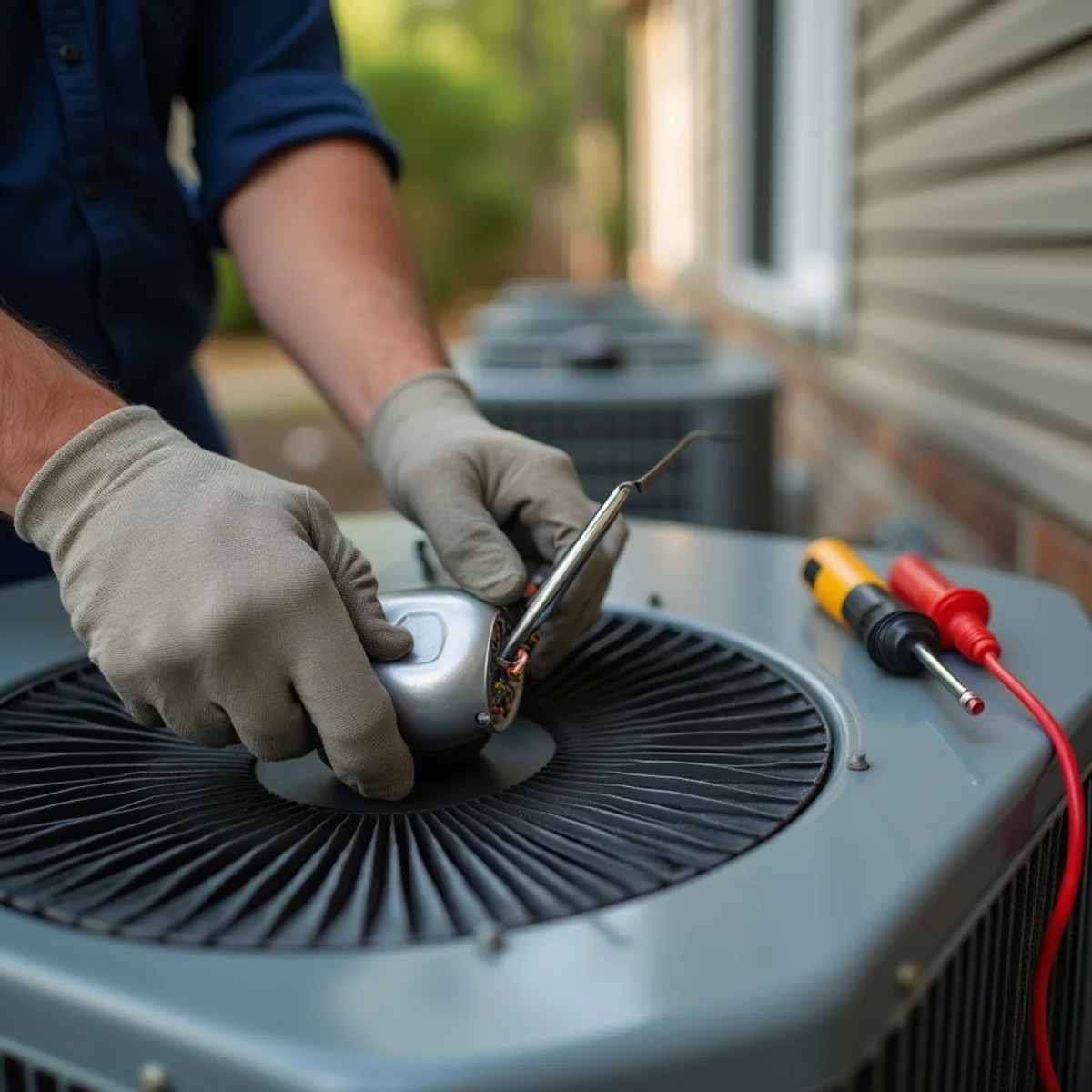
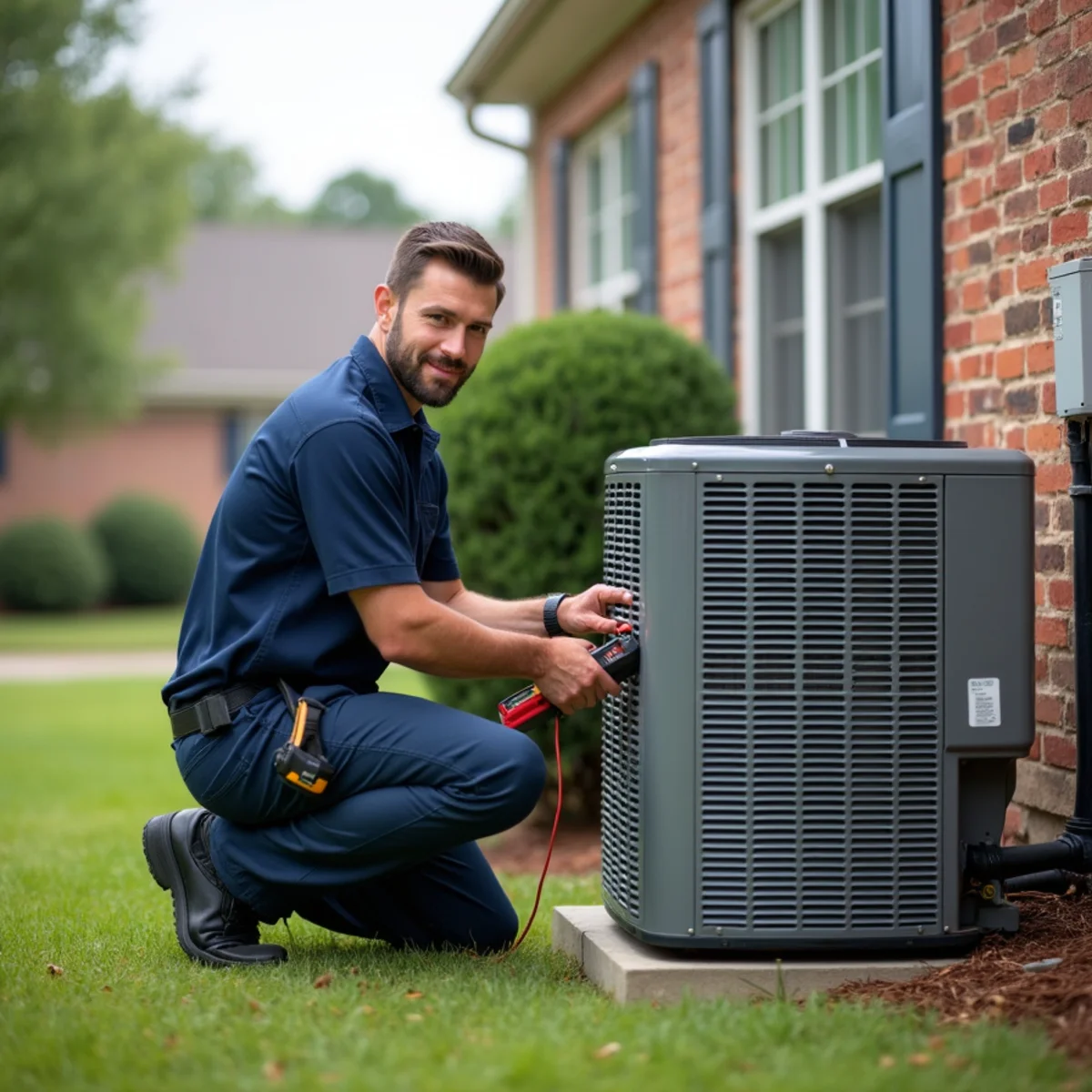
When the AC is blowing warm air, the problem usually sits in the outdoor condenser, where the electrical parts take the hardest beating.
Run capacitors
The capacitor gives the compressor and outdoor fan motor the electrical push they need to start and run. Heat breaks it down over time. A weak one lets the fan stall while the compressor overheats and shuts off. A technician measures it against its rated value, and capacitor replacement is one of the most common AC service calls in the metro area. Many fail without bulging or leaking.
Contactors
The contactor is the switch that turns the outdoor unit on when the thermostat calls for cooling. Its contact points pit and burn with use, and ants like to nest inside. A worn contactor can leave the condenser dead, or running nonstop after the thermostat is satisfied.
Condenser fan motors
The fan on top of the outdoor unit throws off the heat removed from your house. If its bearings wear out, the fan slows or stops, pressure climbs, and the system trips off or delivers lukewarm air. Pollen packed into the coil fins makes it worse.
Compressors
The compressor is the heart of the system. One that will not start may only need a new capacitor or a hard-start device. One with a shorted winding needs replacement, and on an older system that opens the conversation about replacing the AC instead.
Safety warning: Do not open the outdoor unit's electrical panel or try to push-start the fan with a stick. Capacitors can hold a dangerous charge even with the power off.
Water at the attic air handler: clogged condensate drains and tripped float switches
In a typical Kennesaw two-story home, the upstairs system lives in the attic. That air handler pulls gallons of water out of humid summer air, and all of it leaves through a small PVC drain line.
How a clogged condensate drain happens
Algae and slime grow inside the warm, wet line. Add dust and pollen that slip past the filter, and it narrows until it backs up. Lines with too little slope clog faster.
What the float switch does
Most attic systems have a secondary pan and a float switch, sometimes called a wet switch. When water rises, it cuts power to the cooling side so the pan does not overflow into your ceiling. That is why a clogged condensate drain often shows up as an AC that simply stopped, with the thermostat still on and the indoor fan quiet.
What the repair involves
The technician clears and flushes the line, checks the trap and slope, confirms the float switch works, and inspects the primary pan for rust or cracks.
Turn the system off at the thermostat if you see water dripping from a ceiling or light fixture under the attic unit. That limits damage while you wait for help.
Frozen coils and refrigerant leaks in R-22, R-410A and newer R-454B systems
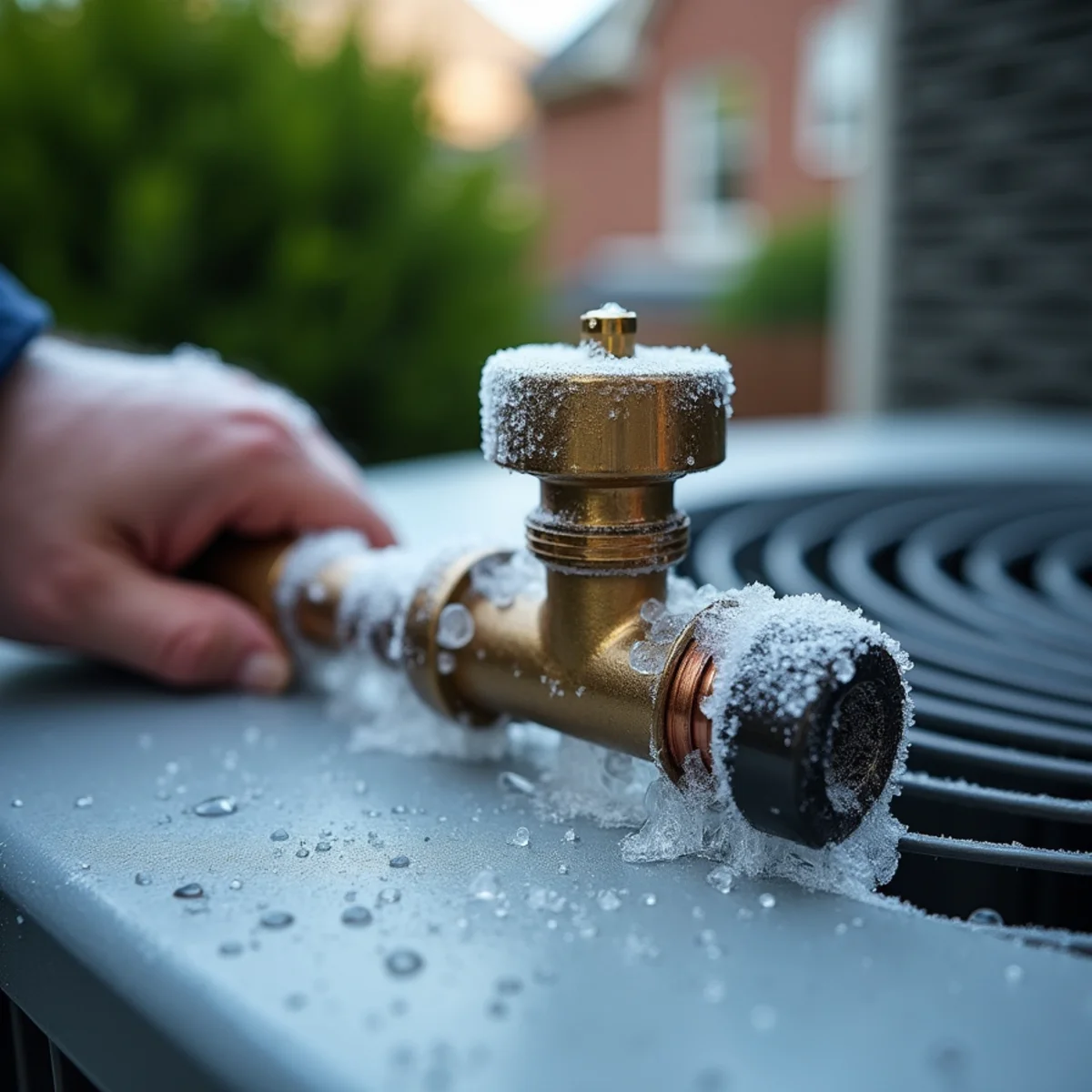
Ice on the copper line or around the indoor coil means the coil is running too cold. A frozen evaporator coil has two common causes: not enough air moving across it, or not enough refrigerant in the system.
Airflow causes
A clogged filter, blocked return grilles, a dirty coil or a failing blower motor starve the coil of warm air. It drops below freezing and ice builds until airflow nearly stops.
Refrigerant leak repair
Refrigerant does not get used up. If the charge is low, it leaked. Common leak points include corroded evaporator coils, rubbing line sets and service valve cores. A technician finds the leak with an electronic detector, bubble solution or a nitrogen pressure test, then explains whether it can be repaired. Topping off a leaking system only delays the problem.
Which refrigerant your system uses matters
- R-22 systems are mostly from before about 2010. U.S. production and import ended on January 1, 2020, so only costly reclaimed supply remains.
- R-410A covers most equipment installed through 2024 and remains fully serviceable.
- R-454B and R-32 are the new generation. Since January 1, 2025, new split systems have been moving to these lower-GWP refrigerants under the EPA AIM Act rules.
Only EPA Section 608 certified technicians may handle refrigerant.
Safety warning: If you see ice, switch the thermostat from Cool to Off and leave the fan on to help it thaw. Running a frozen system can damage the compressor.
Why Kennesaw systems fail in July: 2000s builder-grade equipment, attic heat and humidity
Kennesaw summers average highs in the upper 80s with heavy humidity. A system that limped through June often gives out when it has to run all day in July. Three local factors stack up:
- Equipment age. The median Kennesaw home was built in 1998, and nearly a third went up between 2000 and 2009. Many still run the original builder-grade system or an early replacement. Central air conditioners here typically last 12 to 15 years or a bit more.
- Attic heat. The upstairs air handler, ducts and drain line sit in an attic far hotter than the outdoor air, so motors, capacitors and wiring age faster.
- Humidity and pollen. Moisture keeps drain lines working overtime, and spring pollen clogs filters and coils just before summer.
The same pattern shows up next door. Homes in Acworth's 2000s subdivisions and the two-system houses in Woodstock and Towne Lake see the same July failures. Regular spring maintenance catches weak capacitors and dirty coils before the heat finds them.
What's included in an AC repair visit
Every air conditioning repair call covers the same core work, whether the problem turns out to be a five-minute part or a refrigerant leak.
- A full diagnosis, not a guess. Thermostat and wiring, both breakers, the outdoor capacitor and contactor, fan and blower motors, refrigerant pressures and temperatures, airflow across the indoor coil, and the condensate drain and float switch.
- A written explanation and price. What failed, why it failed, and what it costs to fix, before any work starts. If there is more than one reasonable option, you see each one.
- Common parts on the first visit. Technicians usually carry capacitors, contactors, fuses and drain-cleaning gear, so the most frequent July repairs are often finished the same visit.
- A performance check after the repair. The technician confirms the system cools, drains and cycles normally before leaving, and clears away old parts and debris.
What may need a second trip
Compressors, coils, some fan motors and model-specific control boards are not carried on a truck and may need to be ordered. Refrigerant for older R-22 systems is limited to reclaimed supply. When a part has to be ordered, you hear that up front along with the expected wait.
What an AC repair visit looks like, from call to cool air
Here is how an air conditioning repair call works when you reach Hooten Air Pros.
- You call (321) 478-0693. A person answers at any hour and asks what the system is doing.
- Dispatch. We send the nearest available licensed technician and give you an arrival window when you call.
- Diagnosis. The technician checks the thermostat, filter, electrical parts, refrigerant pressures, airflow and the condensate drain. Good diagnosis measures; it does not guess.
- Explanation and price. You hear what failed and your options, with the price before work starts.
- Repair and test. The technician confirms the system is cooling, draining and cycling normally.
After dark or on a weekend, see our 24/7 emergency HVAC repair page. We cover all of Kennesaw plus Marietta, East Cobb and West Cobb and the rest of our service areas around Kennesaw.
Repair or replace: how to decide on a 12 to 20-year-old system
A failed capacitor on a ten-year-old system is a routine fix, and the unit may have years left. The decision gets harder as the system ages and repairs get bigger. Questions to weigh with your technician:
- How old is the system? Past the 12 to 15-year mark in Georgia, every major repair buys less remaining life.
- What failed? A compressor or an indoor coil is a large repair. A fan motor or capacitor is not.
- What refrigerant does it use? An R-22 system with a leak is a hard case, because recharging depends on scarce reclaimed supply.
- How has it been running? Rising bills and repeated breakdowns point toward replacement.
Our article on whether to repair or replace an old AC covers the R-22 and R-410A question in detail. You get the facts and decide.
What affects the cost of an AC repair
Every repair is priced on the actual job, after diagnosis and before work starts. What moves the number:
- The part. A capacitor or contactor is a small repair. A blower motor, condenser fan motor, evaporator coil or compressor is a much larger one.
- Refrigerant type and amount. R-22 is scarce and expensive. R-410A is widely available. Leak searches and repairs add labor before any recharge.
- Access. An attic air handler over a narrow scuttle hole in August takes more time and care than a unit in a garage.
- Timing. Nights, weekends and holidays can carry after-hours rates. You hear about that before anyone is dispatched.
- Warranty status. Some parts may still have manufacturer coverage.
For a deeper look at the factors behind a repair bill, read what drives AC repair cost in Kennesaw.
Why Choose Hooten Air Pros for AC Repair in Kennesaw
A dead air conditioner in a Kennesaw July is a comfort problem first and a money problem second. Here is what you can count on when you call us for AC repair.
Someone answers at 3 p.m. and at 3 a.m.
Air conditioners quit at the worst times. Calls to (321) 478-0693 are answered 24/7, and the nearest available technician is dispatched with an arrival window you hear on the call.
Licensed, insured, refrigerant-certified
Every HVAC contractor we send is licensed and insured in Georgia. Anyone who connects gauges or recovers refrigerant on your system needs EPA Section 608 certification, which covers the R-22, R-410A and R-454B systems found across Kennesaw.
Tested before anything is replaced
A weak capacitor and a failing compressor can sound alike. The technician measures before recommending a part, so you are not paying for a guess.
A straight answer on old systems
On a 15 to 20-year-old R-22 unit, a repair is not always money well spent. If replacement makes more sense, you hear why, with a price for both options and no pressure.
Attic air handlers are routine here
Two-story homes in Kennesaw, Acworth and Woodstock often put the upstairs system in a hot attic. Drain clogs, float switches and attic coil work are everyday calls, not special cases.
AC Repair Across Kennesaw and Nearby Cities
Calls come in from all over our HVAC service area around Kennesaw. These are the cities we hear from most for ac repair:
We also cover Powder Springs, Canton and Dallas.
AC Repair FAQs
How fast can an HVAC technician get to my home in Kennesaw?
It depends on the time of day, the weather and how many calls are already in the queue. When you call (321) 478-0693, we dispatch the nearest available licensed technician and give you an arrival window on that call, so you know what to expect. Tell us if anyone at home is especially vulnerable to heat.
Why is my AC running but not cooling the house?
The most common causes are a dirty filter, a weak run capacitor, a failing contactor, an outdoor fan motor that has stopped, a low refrigerant charge from a leak, or a frozen evaporator coil. Check that the thermostat is set to Cool, the filter is clean and the outdoor unit is running. If those look right, a technician needs to test the parts. Our AC not cooling checklist covers the safe homeowner checks first.
Can an old R-22 air conditioner still be repaired?
Yes, many R-22 repairs are still possible. Electrical parts like capacitors, contactors and fan motors can be replaced on an R-22 system the same as any other. The challenge is refrigerant: new R-22 production and import ended on January 1, 2020, so any recharge depends on reclaimed supply, which is costly. If an R-22 system has a significant leak, most homeowners are better served by talking through AC replacement before paying for a recharge.
Do you give a price before starting the repair?
Yes. The technician diagnoses the problem first, explains what failed and what the options are, and gives you a written price before any repair work begins. You decide whether to go ahead. If the call comes in at night, on a weekend or on a holiday and after-hours rates apply, you hear that before anyone is sent. Nobody should start work on your system without your approval.
How long does an AC repair take?
Most common repairs, such as a capacitor, contactor or a cleared condensate drain, are finished during the same visit once the problem is found. Finding and fixing a refrigerant leak takes longer. A compressor or coil replacement may need parts ordered and can take a day or more. An attic air handler adds time compared with a garage or closet unit. The technician tells you the expected timing along with the price.