
The short answer
If your AC is running but not cooling, start with eight checks that are safe for any homeowner: the thermostat setting, the breakers, the air filter, blocked vents and returns, the outdoor unit, ice on the lines, the condensate drain switch, and the temperature of the air at your vents.
These catch the simple causes, like a tripped breaker or a pollen-clogged filter. If none of them brings back cold air, or you smell burning, see water coming through a ceiling, or a breaker trips twice, stop and call a technician.
Before You Start: What Not to Touch
Every check below happens at the thermostat, the breaker box, the filter, the vents or the outside of the outdoor unit. None of them needs a screwdriver.
Safety warning: Do not remove panels on the outdoor unit or the indoor air handler, and do not touch the refrigerant line valves. Capacitors can hold a dangerous charge with the power off, and refrigerant work requires an EPA Section 608 certified technician.
If you smell burning plastic or hot wiring, turn the system off at the thermostat and call.
Checks 1 and 2: The Thermostat and the Breakers
1. Confirm the thermostat is really asking for cooling
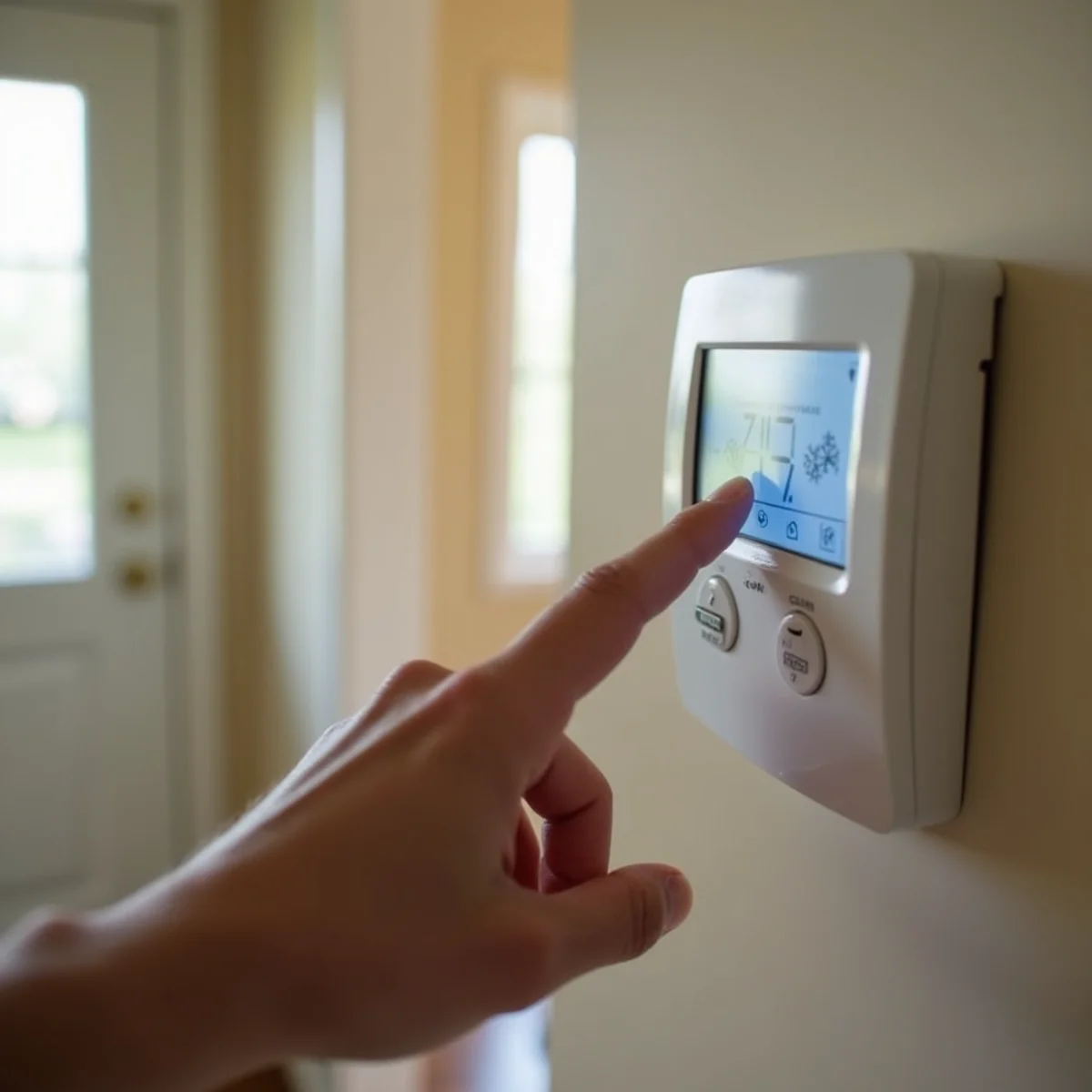
Set the mode to Cool and the set point at least three degrees below room temperature. Set the fan to Auto. On On, the blower keeps moving air after the outdoor unit stops, which feels like warm air.
Replace the batteries if the display is blank, and check for a schedule or eco mode overriding you. In many two-story Kennesaw homes, the upstairs hallway thermostat controls a separate attic unit, so make sure you are adjusting the right one.
2. Look for a tripped breaker
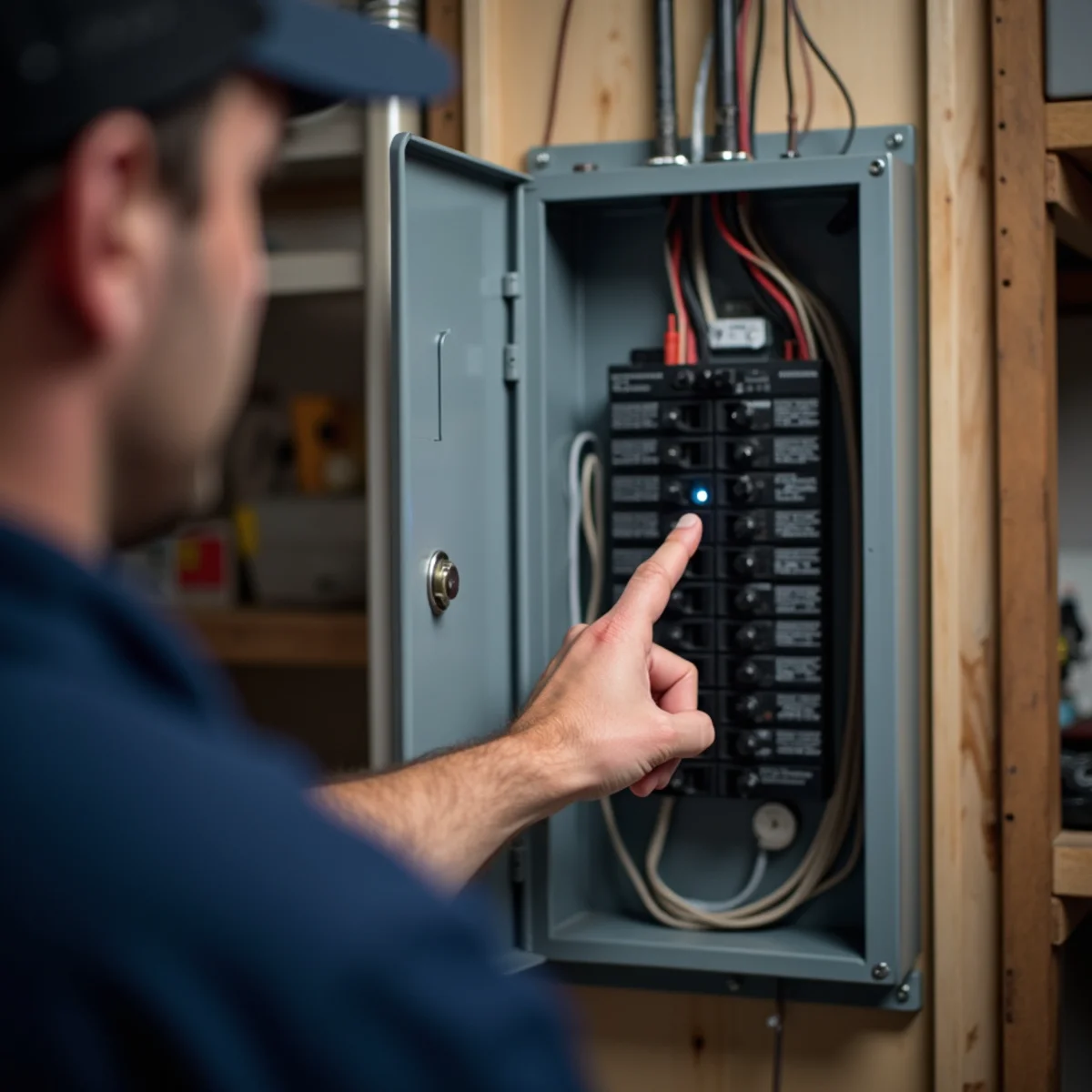
Most central AC systems have two breakers, one for the outdoor condenser and one for the indoor air handler or furnace. At your breaker box, look for a handle labeled AC, condenser or furnace sitting in the middle position. Push it fully off, then on, one time only. Wait five minutes before calling for cooling so the compressor can rest.
If the breaker trips again, leave it off. A repeat trip usually means a failing compressor, a shorted motor or a wiring fault.
Checks 3 and 4: The Filter and the Airflow Inside
3. Pull the air filter
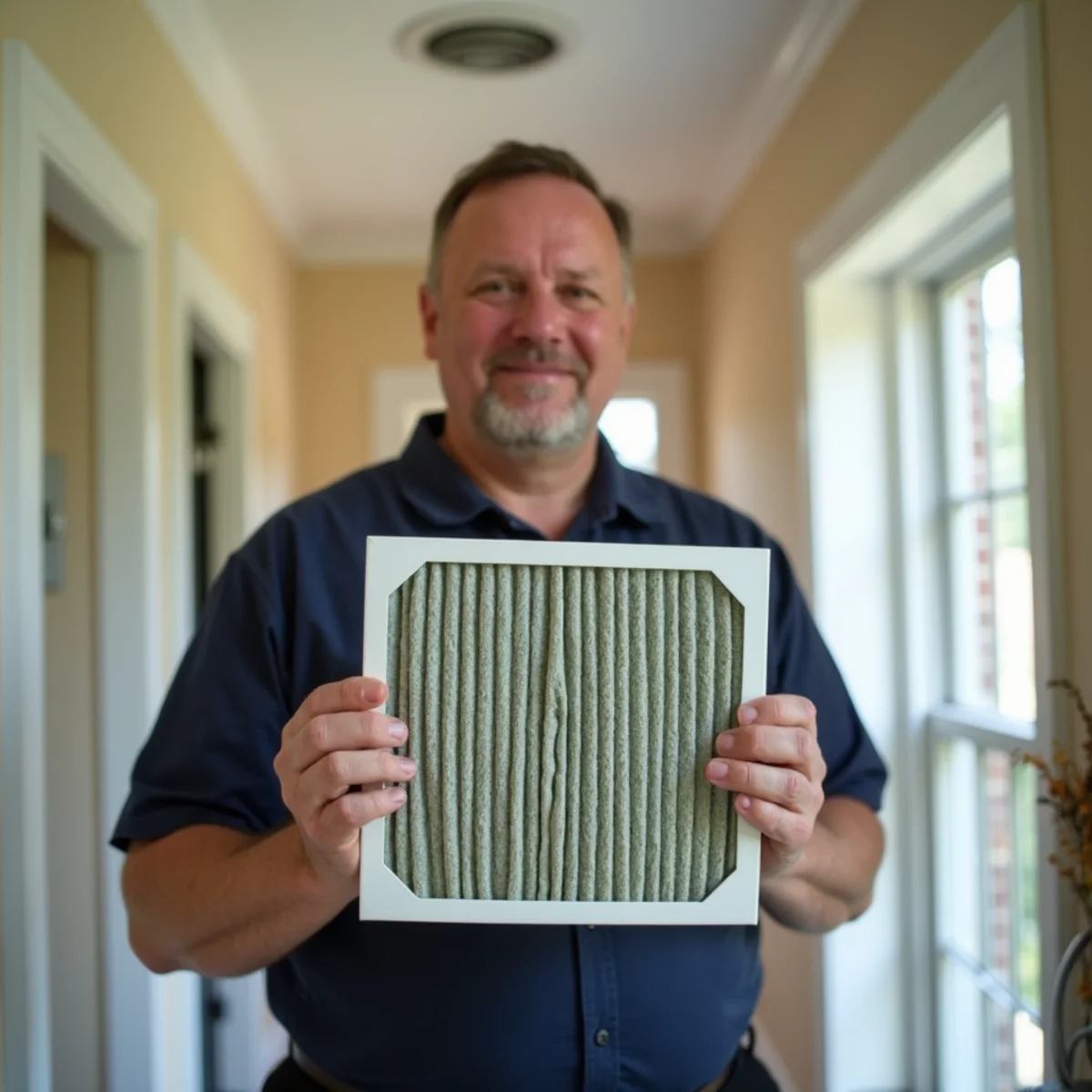
A clogged filter is one of the most common causes of weak cooling. North Georgia's pine pollen coats everything in March and April, and a filter that looked fine in February can be gray-green by May.
Filters sit in a slot at the furnace or air handler, or behind a return grille in a wall or hallway ceiling. Two-story homes usually have at least two. If you cannot see light through it, replace it.
4. Open the vents and clear the returns
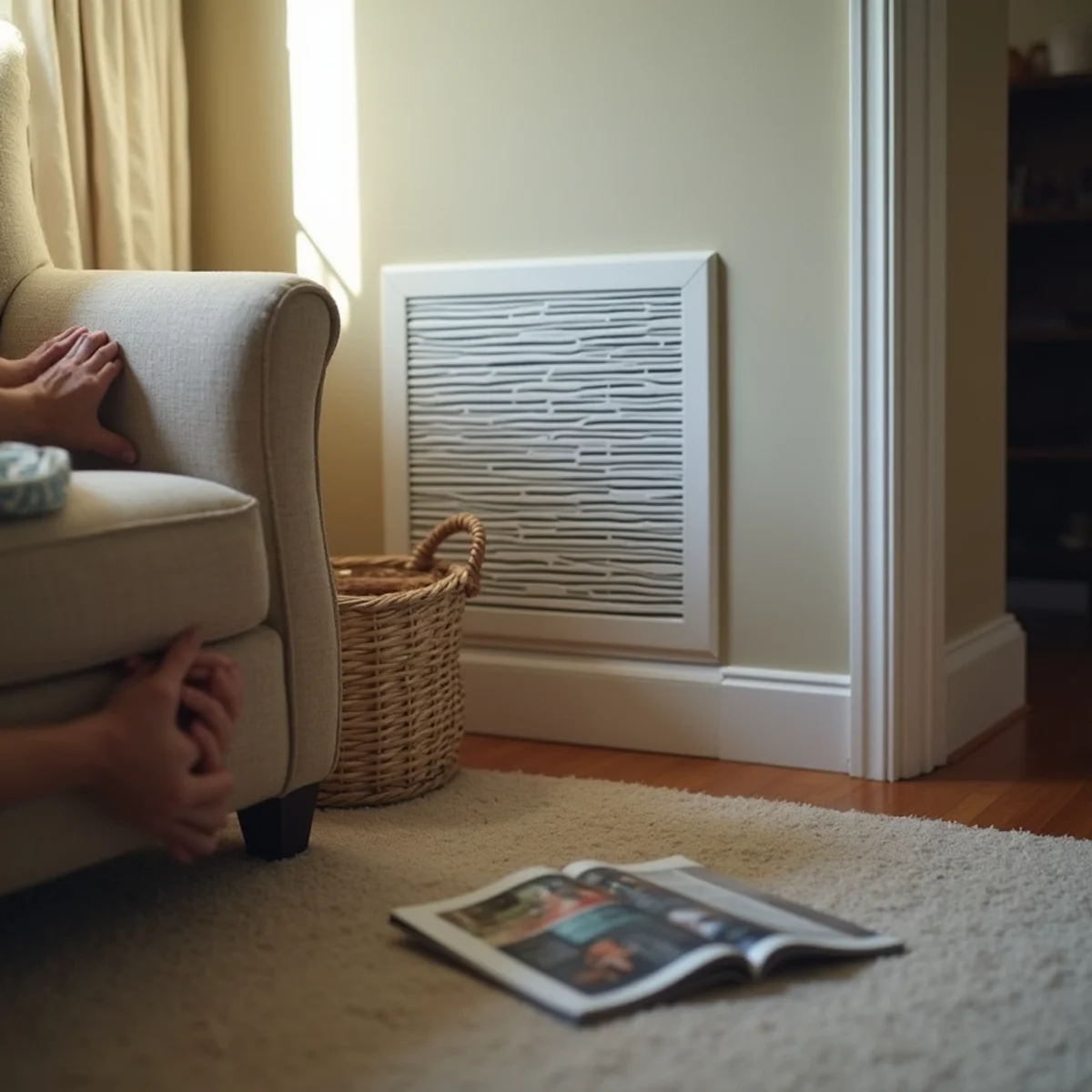
Closed registers in unused rooms, furniture over a floor vent, or a return grille behind a bookcase all starve the system of air. Low airflow can also let the indoor coil freeze, which leads to check 6.
Checks 5 and 6: The Outdoor Unit and Signs of Ice
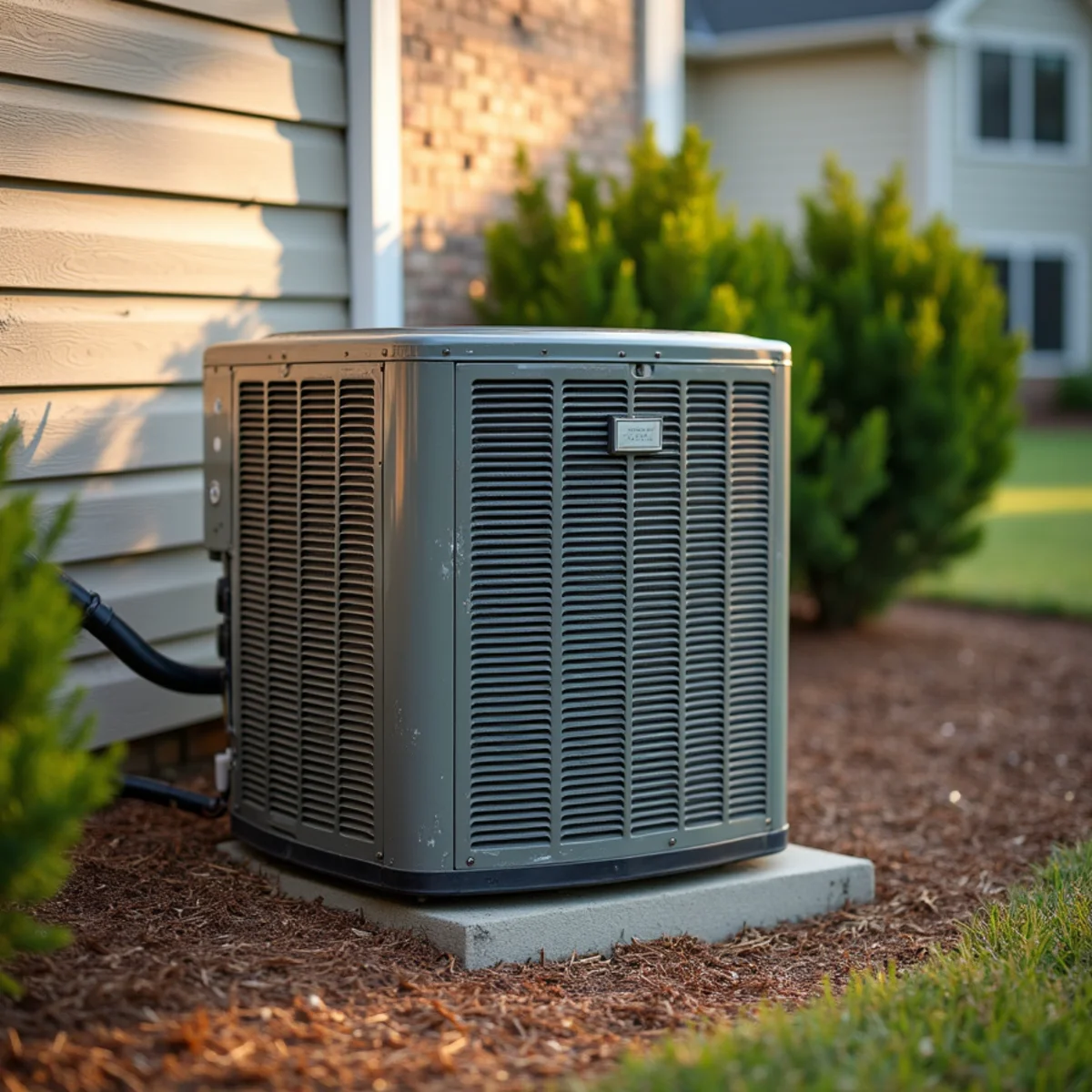
5. Watch and listen at the outdoor unit
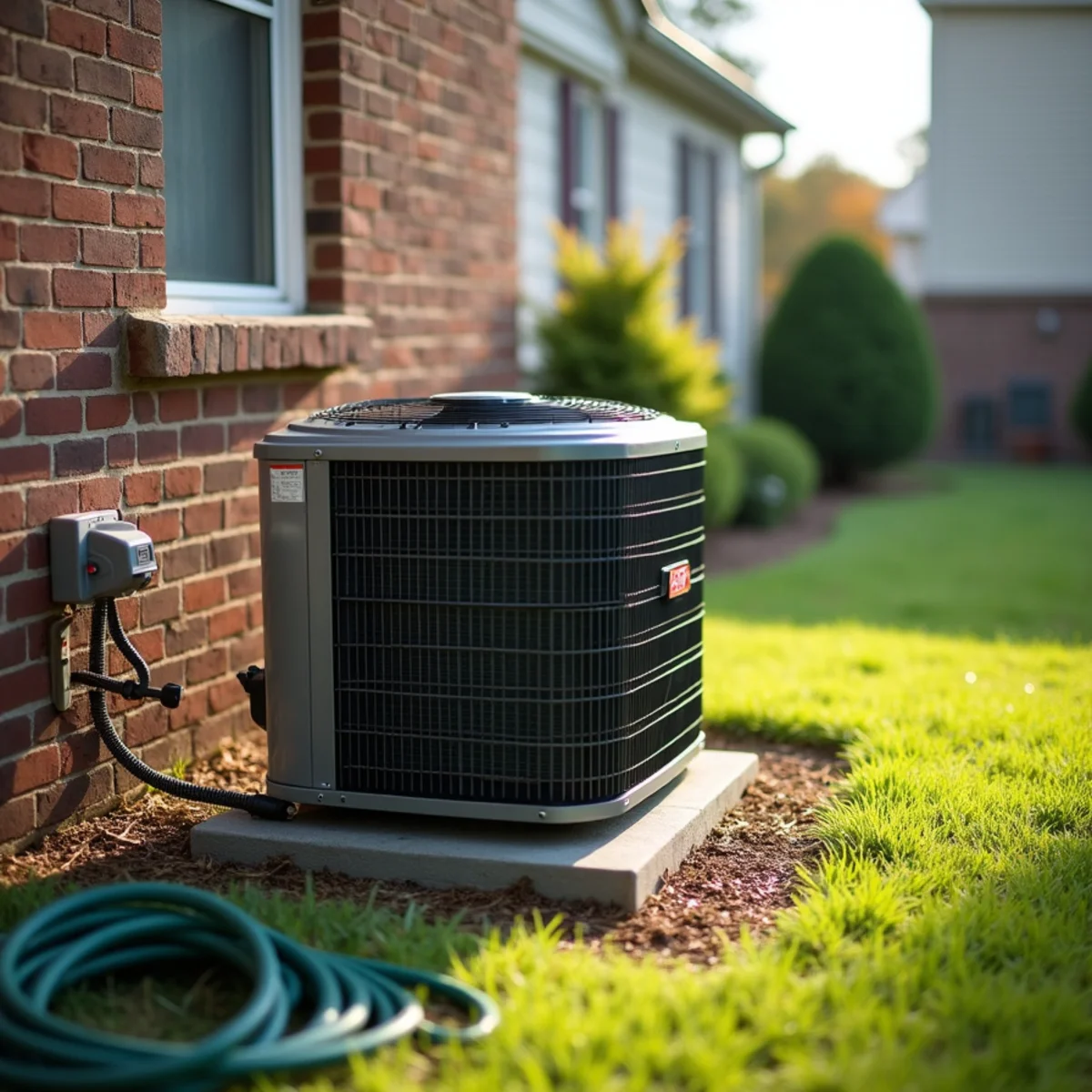
With the thermostat calling for cooling, stand beside the condenser. You should hear the compressor and see the top fan blowing warm air upward.
- Fan and compressor running: power is reaching it. Look at airflow, refrigerant or the indoor side.
- Humming, fan not turning: turn the system off. This often means a failed capacitor or fan motor, a common July repair.
- Silent: recheck breakers and thermostat. A failed contactor can also keep it off.
Clear leaves, grass clippings and anything within two feet of the coil. If the fins are matted with pollen, turn the system off and rinse gently from outside with a garden hose. No pressure washer, and leave the panels on.
6. Check for ice
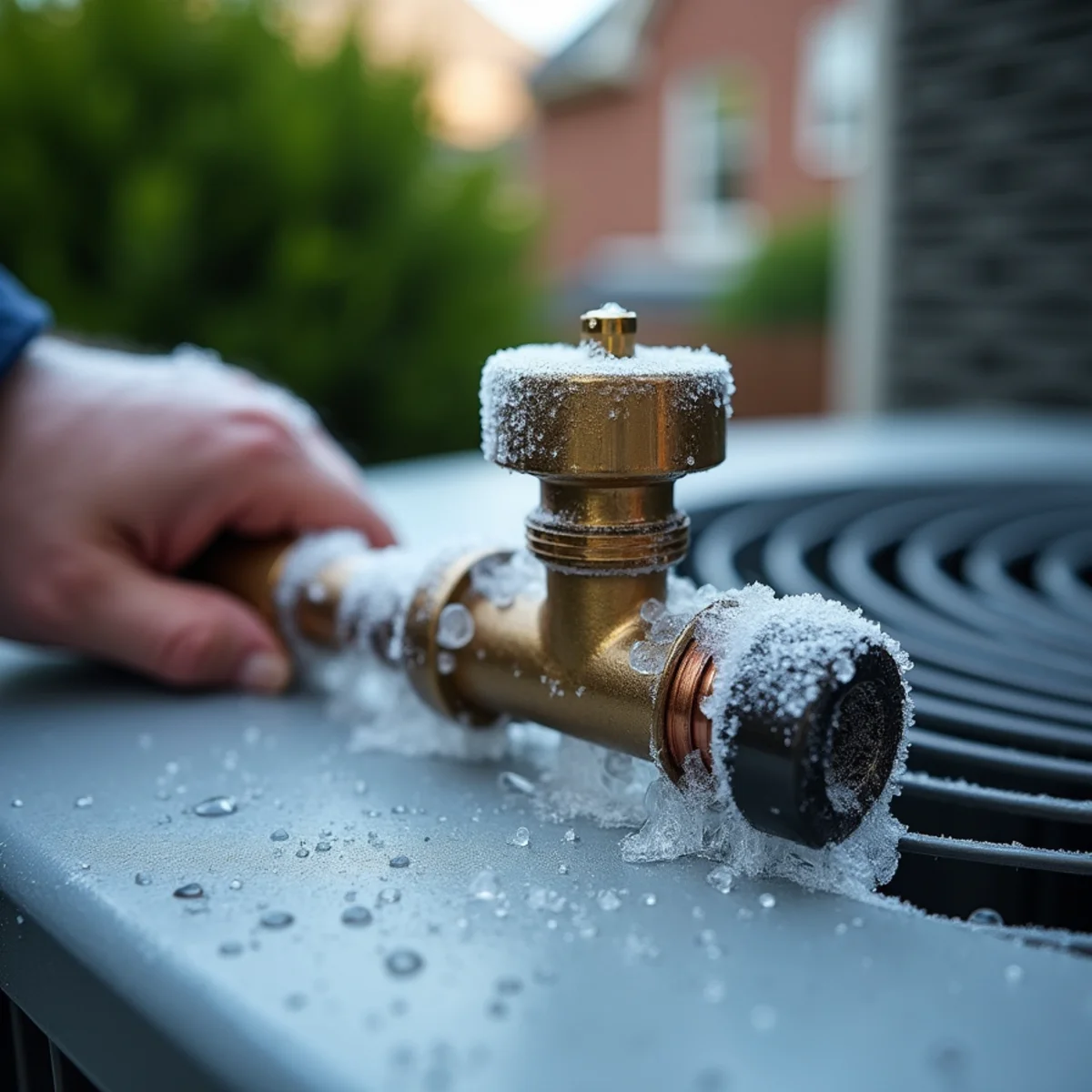
Frost on the larger insulated copper line means the coil is freezing. Turn cooling off and run the fan on On for a few hours to thaw it. Do not chip at it. Ice has a cause, usually a dirty filter or low refrigerant from a leak. If it returns after a filter change, call a technician.
Checks 7 and 8: The Drain Switch and the Air at Your Vents
7. Check the condensate drain and float switch
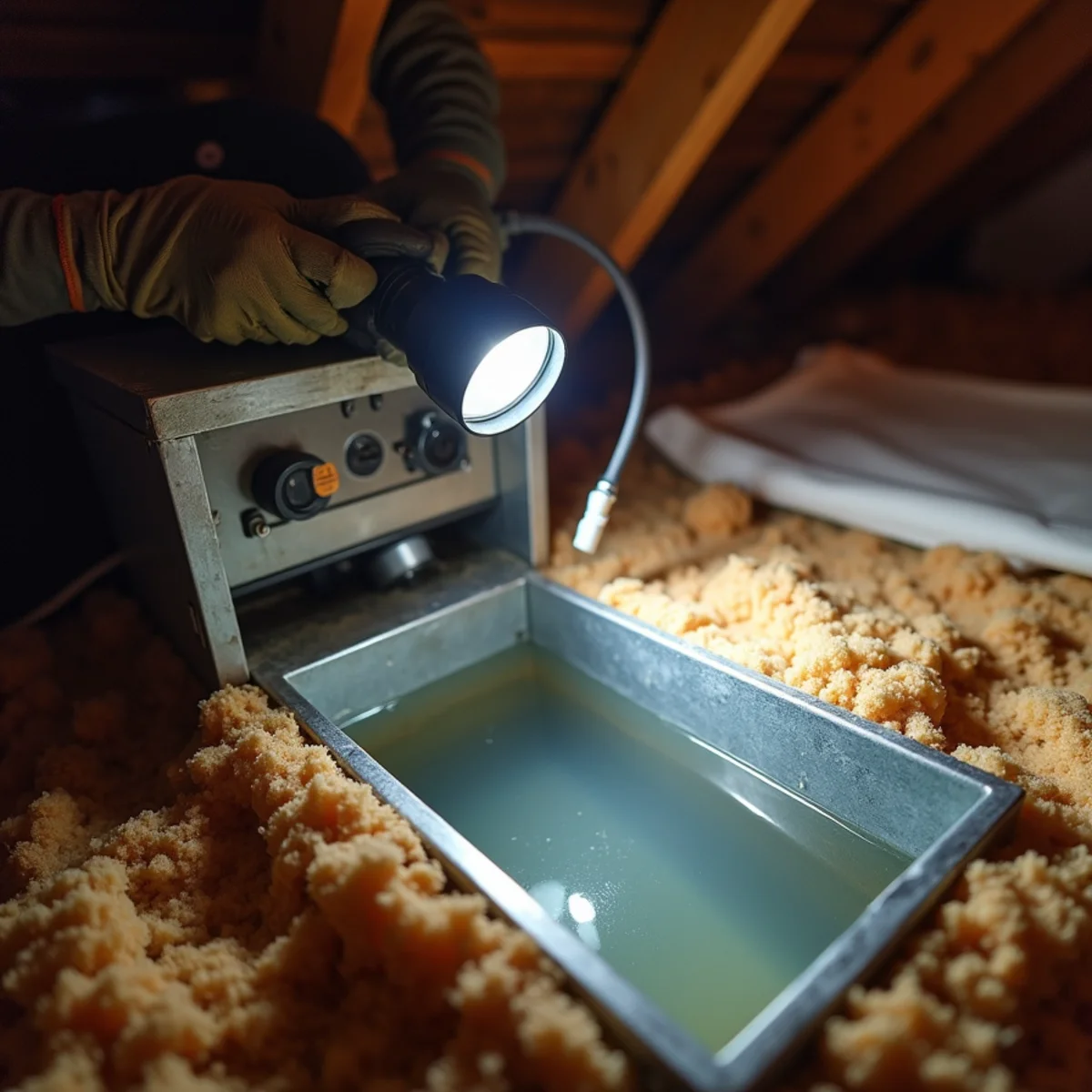
In July, an air conditioner in Cobb County pulls gallons of water out of the air each day through a small PVC drain line. When algae clogs it, a float switch shuts the system off to keep water out of your ceiling. The thermostat may still show cooling while the outdoor unit sits quiet.
If you can reach the attic unit along a floored path, look at the pan under it. Standing water means a clogged drain. Many homeowners can clear the line from its outdoor end with a wet-dry vacuum. If water is already in the ceiling or the attic is not safe to cross, call.
8. Measure the air coming out
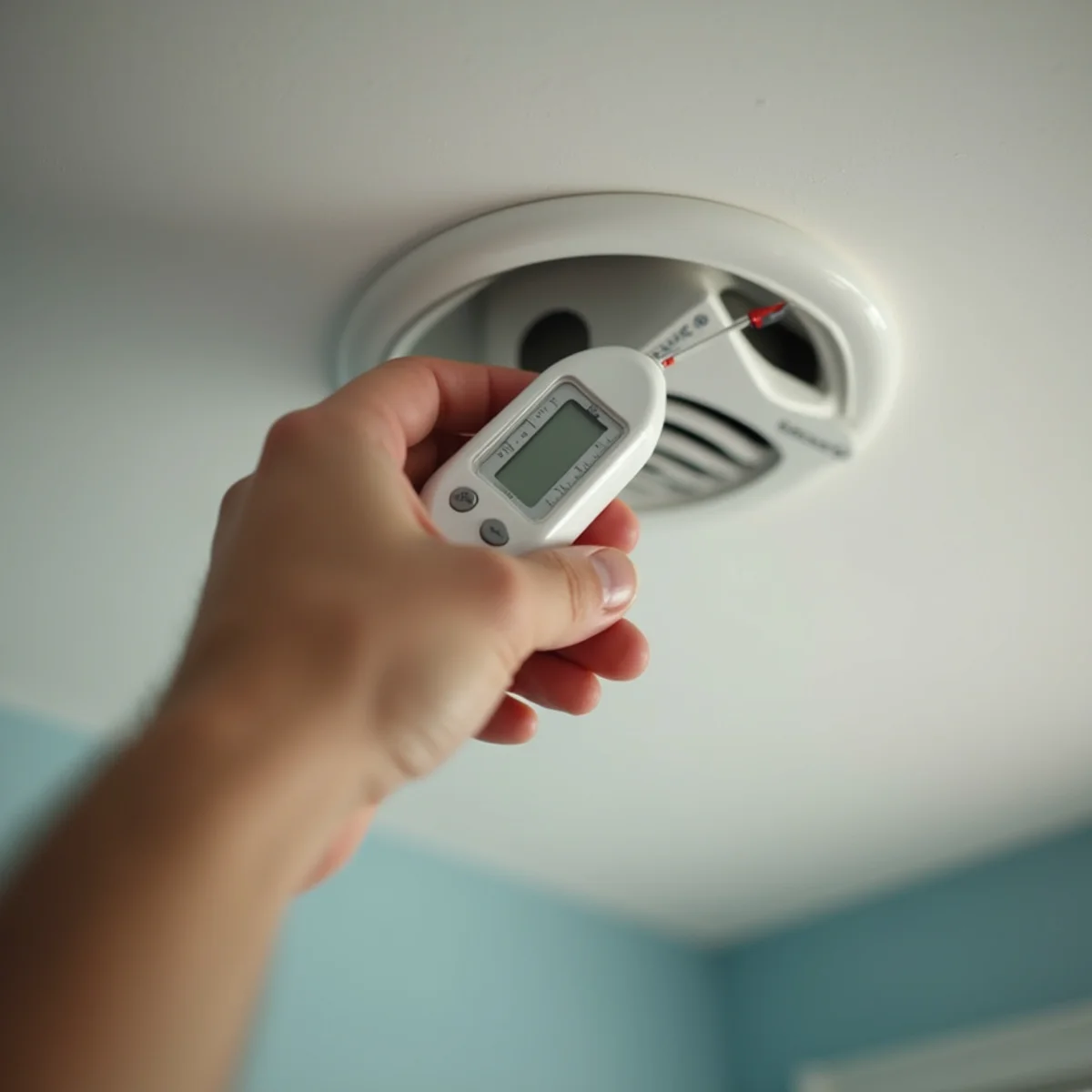
Hold a kitchen thermometer in a supply vent for a few minutes, then in the return grille. A working system usually delivers air roughly 15 to 20 degrees cooler than the air going in. A much smaller difference points to a refrigerant, compressor or coil problem.
On a 95-degree afternoon, a healthy system may run nonstop and drift a few degrees above the set point. If it catches up by evening, that is a question for a seasonal maintenance visit, not an emergency.
When to Stop Checking and Call
Call for emergency AC repair right away if:
- A breaker trips a second time
- You smell burning or see scorch marks at the thermostat or unit
- Water is dripping through a ceiling or light fixture below the attic unit
- The outdoor unit hums or buzzes but the fan will not turn
- Ice returns after you replaced the filter and thawed the coil
- Someone at home is elderly, an infant, or has a medical condition, and the house is climbing past the mid-80s
If the house is livable and the system is just losing ground, a daytime AC repair visit is usually fine. Either way, tell the dispatcher what you already checked so the technician can bring likely parts.
Why Breakdowns Cluster in July Around Kennesaw and Acworth
About a third of Kennesaw homes were built between 2000 and 2009, and many still run builder-grade equipment from that decade, much of it on R-22, whose U.S. production ended January 1, 2020. Those units are past the 12 to 15 years a central AC typically lasts here. In July the outdoor unit runs for hours in high-80s heat, the attic air handler bakes, and weak capacitors finally quit.
Acworth's 2000s subdivisions and older homes near Lake Acworth share that profile. If a technician finds a major failure on a system that age, read our guide on whether to repair or replace an older AC.
From the Field: What Technicians Find on Kennesaw No-Cool Calls
After the checks above, the same few causes account for most July no-cool calls in Kennesaw and Acworth homes.
The usual suspects
- A failed run capacitor. Heat wears these down, and a weak one lets the outdoor fan stall while the compressor overheats. It is one of the most common summer repairs and often finished on the first visit.
- A tripped float switch. In two-story homes, the upstairs air handler sits in the attic. When algae clogs its drain line, the float switch cuts power to the outdoor unit. The thermostat still says "cool," the fan may still run, and the outdoor unit sits silent.
- A frozen coil from low airflow. A filter that went gray-green during pollen season can freeze the indoor coil within a few hot days.
- A slow refrigerant leak. Common on coils that are 12 or more years old. Adding refrigerant without finding the leak only buys a few weeks.
Tell the technician what you noticed
Details save diagnostic time: whether the outdoor fan was spinning, whether the air from the vents was cool but weak or room temperature, when the problem started, whether it followed a storm or a power flicker, and what you already checked. A photo of the model plate on the outdoor unit helps the technician bring the right part on the first trip.
The honest tradeoff
A cheap fix is not always the right one. If a 15 to 20-year-old R-22 system needs refrigerant, the repair can cost more than it is worth. Ask for the repair price and a replacement comparison before deciding.
Still Warm Inside? Get Help Tonight
If the eight checks did not bring back cold air, call Hooten Air Pros at (321) 478-0693. We answer 24/7 and dispatch the nearest available technician, and you get an arrival window when you call. Every HVAC contractor we send is licensed and insured in Georgia.
The technician diagnoses the problem and gives you the price before any work starts. Until then, close the blinds, run ceiling fans, and leave the system off if it was freezing or tripping breakers.
Common Questions
Should I turn my AC off if it is not cooling?
Usually, yes. If the outdoor unit hums without the fan turning, the coil is icing, or a breaker tripped, running it longer can damage the compressor. Switch to Off, or fan On if you are thawing ice. If it is running normally and just losing ground on a very hot afternoon, leaving it on is fine.
Can I add refrigerant to my AC myself?
No. Handling refrigerant requires EPA Section 608 certification, and low refrigerant means a leak. Adding more without fixing it only buys time. Older systems use R-22, no longer produced in the U.S., and newer ones use R-410A or R-454B, which cannot be mixed. A technician finds the leak and quotes the fix.
Could a clogged drain line be why my AC shut off?
In summer, it often is. Many attic air handlers in Kennesaw homes have a float switch that cuts power when water backs up in the drain line or pan. The thermostat can look normal while nothing runs. Once the drain is cleared and the water is gone, the switch usually resets.