The short answer
For a 15 to 20-year-old central AC in Georgia, replacement usually makes more sense when the system uses R-22 and needs refrigerant, when the compressor or a coil fails, or when repairs have become a yearly event. A small repair, such as a capacitor, contactor or drain clearing, is usually still worth doing, especially on a maintained R-410A system.
The refrigerant on the outdoor unit's label is the first clue: R-22 systems are on borrowed time, while R-410A systems remain fully serviceable.
Start With the Label on the Outdoor Unit
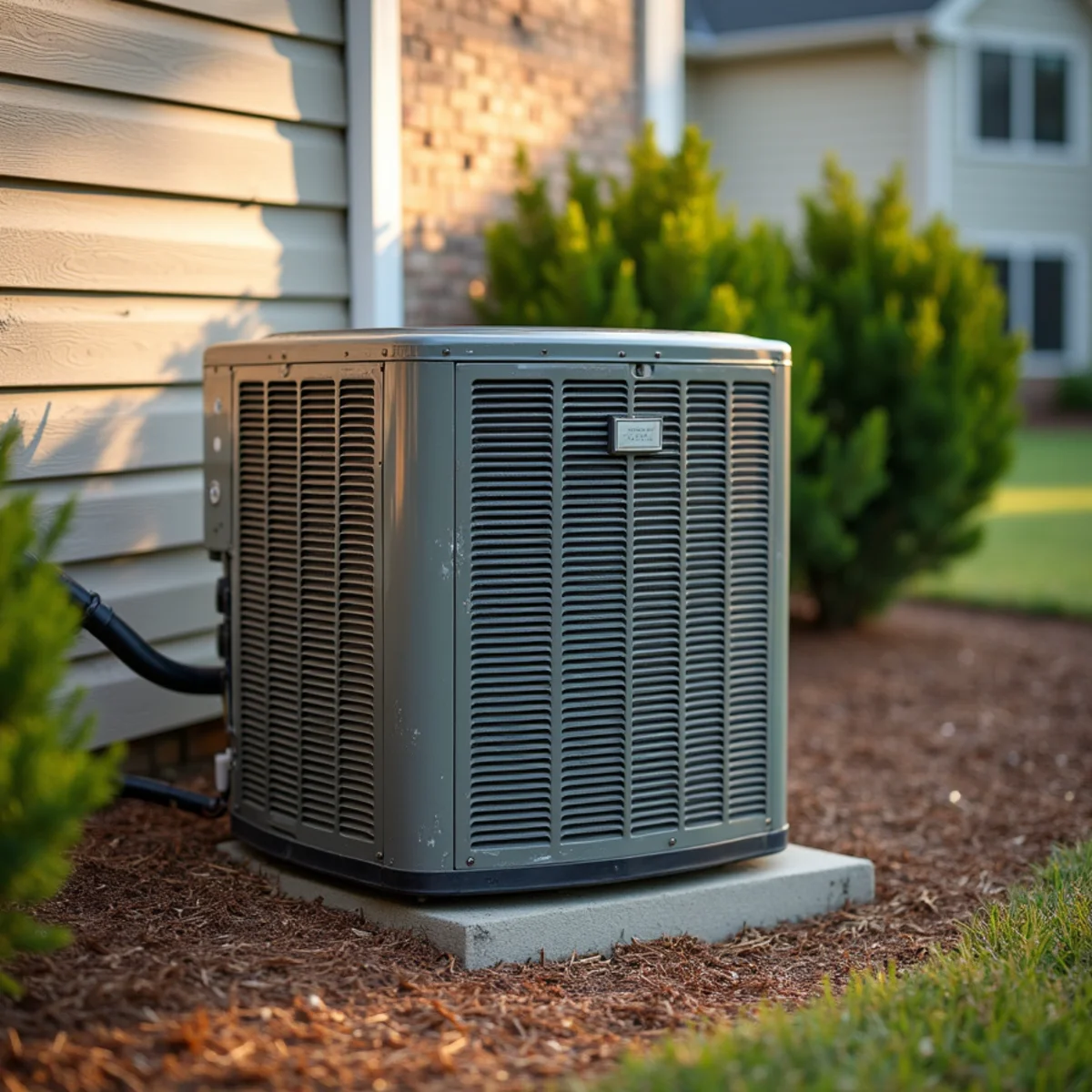
Find the metal rating plate on the side or back of the condenser and take a photo. You need three things from it:
- The refrigerant: R-22 (sometimes listed as HCFC-22), R-410A, or on new equipment R-454B or R-32.
- The model number: the size in tons is often coded into it.
- The serial number: many brands encode the manufacture year in it. A technician can decode it if it is not obvious.
With the refrigerant type and the age, you already know which of the two very different conversations below you are having.
If Your System Uses R-22
R-22 was the standard refrigerant in home air conditioners for decades, and plenty of builder-grade systems installed in Kennesaw-area subdivisions in the 2000s still run on it. U.S. production and import of R-22 ended on January 1, 2020. What remains is reclaimed and stockpiled refrigerant, and it gets scarcer every year.
That changes the math on any refrigerant repair:
- A recharge on a leaking R-22 system is a short-term fix at a premium price, because the leak is still there.
- You cannot add R-410A to an R-22 system. They run at different pressures with different oils.
- Some contractors offer substitute refrigerants rated for R-22 equipment. They need the right procedure, can change performance, and are worth discussing in detail before anyone commits.
- Swapping only the outdoor unit is rarely possible. A new condenser uses a newer refrigerant and needs a matched indoor coil, and the line set must be evaluated.
An R-22 system that needs a non-refrigerant repair, like a capacitor or contactor, can still be worth fixing to finish a season. Treat that repair as time to plan, not a reset of the clock.
If Your System Uses R-410A
Systems installed from about 2010 onward use R-410A. Kennesaw's post-2010 homes and townhomes are full of them, and many are now entering their repair years.
The 2025 refrigerant transition does not make these systems obsolete. Starting January 1, 2025, manufacturers moved new split AC and heat pump systems to lower-GWP refrigerants such as R-454B and R-32. R-410A remains available for servicing existing equipment, and technicians work on it every day. A 15-year-old R-410A system that cools well and has a light repair history is a reasonable candidate for repair.
What the transition changes is replacement. If an R-410A outdoor unit fails beyond repair, its replacement will most likely use R-454B or R-32, which again means a matched indoor coil and a line set check.
Repairs That Make Sense vs. Repairs That Point to Replacement
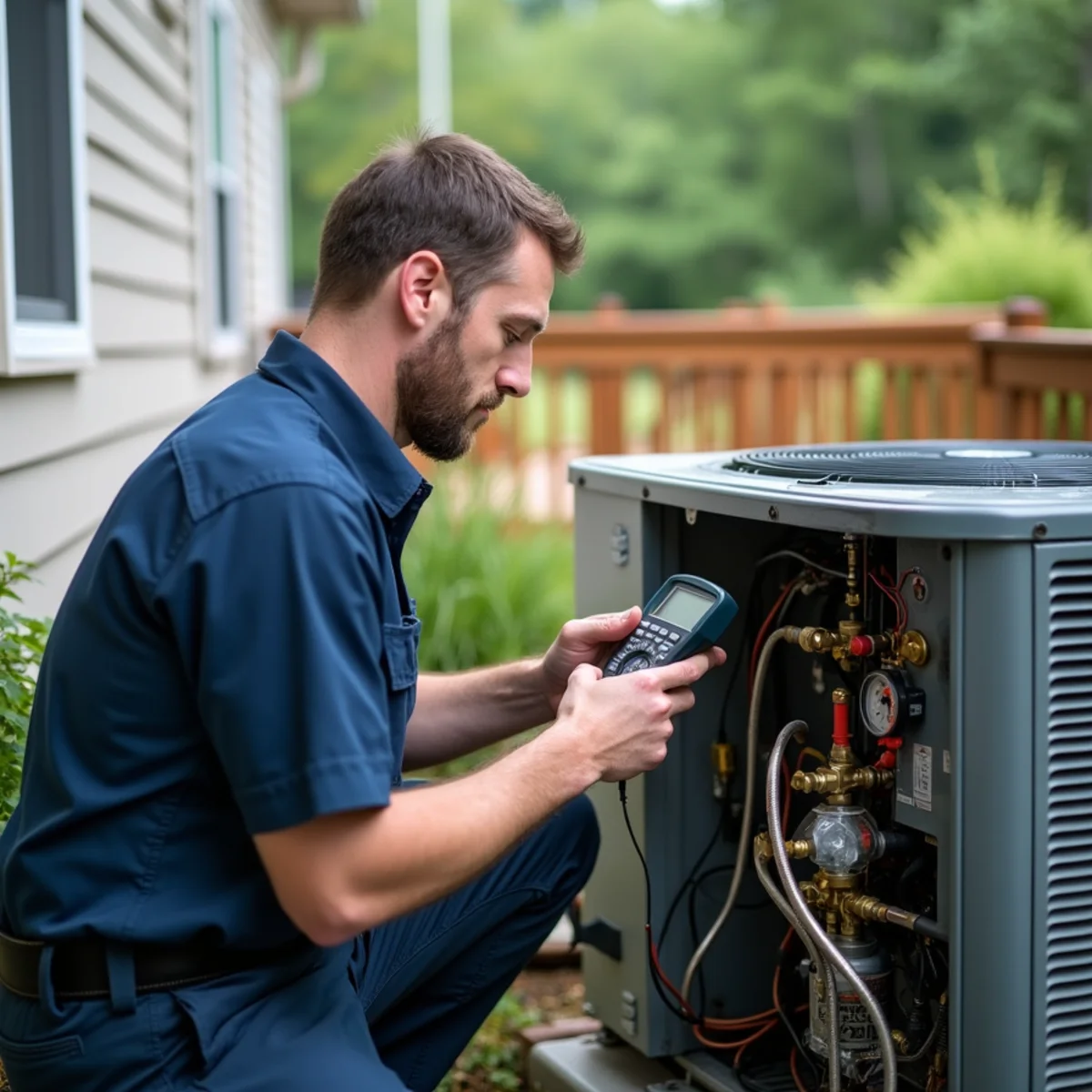
Usually worth repairing on an older system
- Capacitor, contactor or relay
- Clearing a clogged condensate drain or replacing a float switch
- An outdoor fan motor on an otherwise healthy unit
- Thermostat or low-voltage wiring problems
- A small, accessible leak on an R-410A system
Usually the point to talk about replacement
- A failed compressor on a system past about 12 years
- A coil leak on an R-22 system
- A second refrigerant leak within a few seasons
- Several repairs in the last two summers, with another one now
- A system that runs all July afternoon and still cannot hold the set point
A rule of thumb many technicians use: when a repair costs a large share of a new system and the equipment is already past its typical lifespan, replacement is usually the better use of the money. Ask for both figures so you can compare. Our post on what drives AC repair cost in Kennesaw explains the repair side.
Questions Beyond the Broken Part
The failed part is one input. Before you decide, consider:
- Comfort: Is the upstairs always hot, or does the house feel clammy in July? Replacement is a chance to fix sizing and humidity problems, not just restore what you had.
- Efficiency: Since January 1, 2023, new split central air conditioners in the Southeast must meet at least 14.3 SEER2 under 45,000 Btu/h and 13.8 SEER2 at or above that size, well above what most 2000s systems were built to.
- The furnace or air handler: A new outdoor unit has to match the indoor equipment. If the furnace is also 15 to 20 years old, replacing both together often makes sense. See our furnace repair page for signs it is near its end.
- Two systems: Many two-story homes have upstairs and downstairs systems of the same age. When one fails, ask about the other.
- How long you will stay: A short horizon favors the smaller repair.
What a Replacement Involves Now
A good contractor starts with the house, not the old unit's size. A Manual J load calculation looks at square footage, insulation, windows and orientation. Many builder-grade systems were sized by rule of thumb, and a correctly sized replacement often handles humidity better than the original.
From there, the contractor selects equipment (Manual S), checks whether the ducts can carry the airflow (Manual D), and pairs an R-454B or R-32 outdoor unit with a matched coil. Replacement generally requires a mechanical permit, which the licensed contractor pulls through the local building department, such as the City of Kennesaw or Cobb County, depending on your address. Our AC installation and replacement page covers the full process.
Why Canton and Dallas Homes Face This Now
The housing north and west of Kennesaw makes this question common. Canton nearly tripled in population between 2000 and 2010, and master-planned communities such as BridgeMill, Great Sky and River Green went up in that window. Whole neighborhoods are reaching first-replacement age together.
Dallas and the surrounding Paulding County subdivisions, including Seven Hills, grew just as fast. Many homes there still run original builder-grade equipment, and some are R-22 units that are no longer economical to recharge.
From the Field: Rules of Thumb and What They Miss
You will see two shortcuts quoted for this decision. Both are useful starting points, and both leave things out.
The two common rules
- The 50 percent rule. If a repair costs more than about half the price of a new system, replacement usually wins.
- The 5,000 rule. Multiply the system's age by the repair price. If the result is above 5,000, replacement deserves a hard look. A 16-year-old system facing a mid-sized repair crosses that line quickly.
What the rules cannot see
Neither rule knows your refrigerant, your ducts or your comfort. An R-22 system needing a recharge fails both rules on refrigerant price alone. A newer R-410A system with a bad compressor still under parts warranty may pass them easily. And if the upstairs has never cooled properly, a like-for-like repair keeps the comfort problem you already have.
What a technician looks at to judge remaining life
- Compressor health. Amp draw compared with the rating on the data plate, and how hard it starts.
- Coil condition. Pinhole corrosion on older copper coils causes slow leaks that keep coming back.
- Rust and wear. A rusted base pan, a wobbling fan motor and a history of capacitor failures all point the same way.
- Matching. On an R-22 system, the outdoor unit cannot simply be swapped for an R-410A or R-454B unit. The indoor coil has to change too, which is why a "condenser only" quote on an old system deserves questions.
Get an Honest Repair-or-Replace Answer
You do not have to decide on the spot. Call Hooten Air Pros at (321) 478-0693 and we will dispatch a licensed contractor to diagnose the system and price the AC repair first. If replacement makes more sense, ask for a written replacement quote too, so you can compare both side by side. Every HVAC contractor we send is licensed and insured in Georgia. We answer 24/7, so if the system quits on a July night, you can call any hour.
Common Questions
How can I tell how old my air conditioner is?
Check the rating plate on the outdoor unit. Many manufacturers encode the year of manufacture in the serial number, and some plates print the date outright. If you cannot decode it, photograph the plate and send it to the technician. Home inspection reports and permit records from the purchase of the home can also show when the system was installed.
Will the 2025 refrigerant change make my R-410A system hard to service?
Not in the near term. The 2025 rule changed which refrigerants manufacturers may use in new split systems. It did not ban servicing existing R-410A equipment, and technicians continue to repair and recharge these systems. Supply may tighten and prices may move over time, which is one more reason to fix leaks rather than keep topping off refrigerant.
Can I replace only my outdoor unit?
Sometimes, but rarely on an older system. A new outdoor unit must match the indoor coil to reach its rated efficiency and to work with its refrigerant. On an R-22 system, a newer-refrigerant condenser needs a new coil and a line set evaluation. On a newer R-410A system, a matching replacement may still be available. The technician can tell you what fits.
Is it worth replacing a working AC just because it uses R-22?
Not necessarily. If the system cools well, has no leaks and has been maintained, many owners keep running it and plan ahead. The risk is that the first refrigerant leak forces an expensive decision on a hot day. Getting a replacement quote now, while nothing is broken, lets you choose equipment and timing on your own terms.